
What IP Rating Does a Bathroom Need in Each Zone?
Discover essential IP ratings for bathroom zones to ensure safety and compliance. Learn what your space needs before installing lighting or fans.
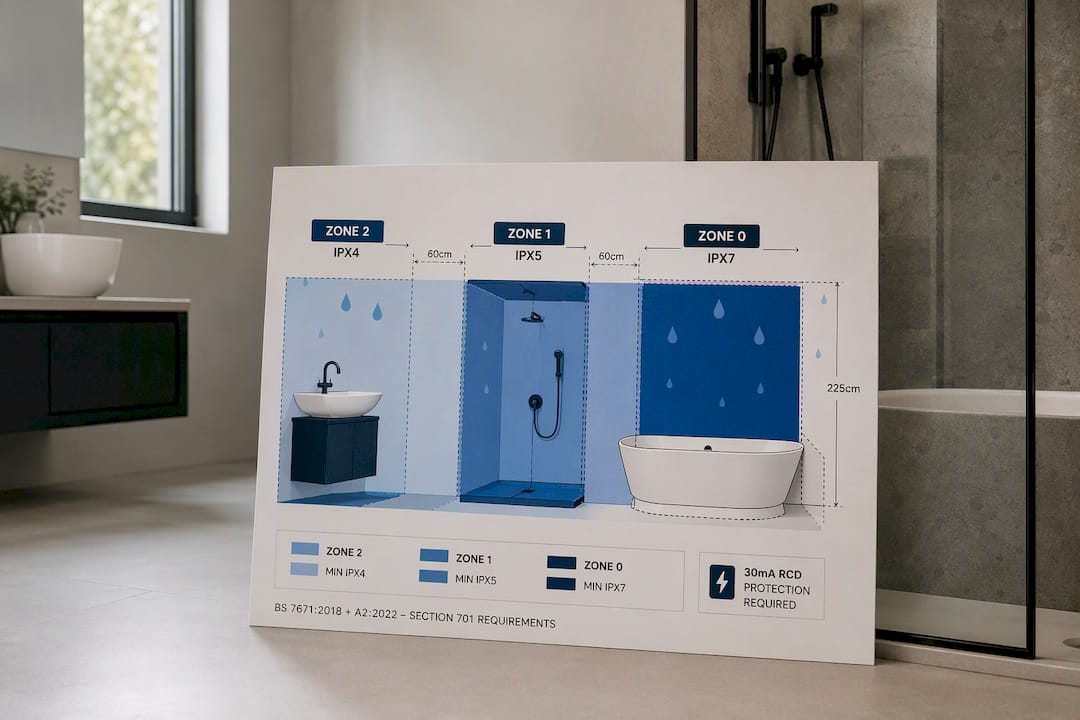
For UK bathrooms, the rule is straightforward: Zone 0 needs IPX7 on a 12V SELV supply, Zone 1 needs a minimum of IPX4, stepping up to IPX5 or IP65 if a power shower or body jets are involved, and Zone 2 needs a minimum of IPX4. Outside the zones, no specific IP rating is legally required, though most electricians still avoid basic IP20 fittings in a humid room. Every circuit feeding a room with a bath or shower must carry 30mA RCD protection, and this work counts as notifiable under Part P.
Before you buy a single light or fan, do three things:
- Measure which zone the fitting will actually sit in.
- Check the product datasheet for its exact IP rating, not just the box copy.
- Ask your installer for a test certificate once the job’s done.
Key Takeaways
Bathroom electrical safety comes down to matching the correct IP rating to each zone and backing every circuit with 30mA RCD protection, verified by a registered electrician’s certificate.
| Point | Details |
|---|---|
| Zone 0 needs IPX7 and SELV | Only 12V equipment rated for immersion belongs inside the bath or shower tray itself. |
| Zones 1 and 2 need IPX4 minimum | Step up to IPX5 or IP65 where a power shower, jets, or hose cleaning is likely. |
| RCD protection is mandatory | Every circuit feeding a room with a bath or shower needs 30mA RCD cover, no exceptions. |
| IP65 outlasts IP44 on ceilings | Steam drifts past zone boundaries, so many installers fit IP65 across the whole ceiling anyway. |
| Certification is non-negotiable | Insist on a registered electrician and a signed certificate for any notifiable bathroom work. |
Where to Verify These Rules Yourself
- The IET’s Section 701 guidance is the primary regulatory text on bathroom zones and IP minima.
- BS 7671 FAQs from Wiring Matters clarifies switch placement and other common points of confusion.
- Manufacturer datasheets remain the fastest way to confirm a specific product’s tested IP rating before you buy.
Table of Contents
- Understanding IP Ratings for Bathrooms and Where They Apply
- How Do You Read an IP Rating on a Bathroom Fitting?
- What Do BS 7671 and Section 701 Actually Require?
- IP44 or IP65: Which Rating Should You Actually Buy?
- Your Checklist Before Buying or Signing Off Bathroom Fittings
- What a Compliant Bathroom Installation Actually Looks Like
- The Gap Between “Legal Minimum” and “Actually Lasts”
- Frequently Asked Questions
- Sources
Understanding IP Ratings for Bathrooms and Where They Apply
You can’t apply the right IP rating until you know which zone you’re standing in. BS 7671 Section 701 splits a bathroom into three zones plus everything else, and each one has a distinct minimum standard.
- Zone 0 is the inside of the bath or shower tray itself, where water sits or flows directly. Only equipment designed for permanent contact with water belongs here, and it must run on a Safety Extra Low Voltage (SELV) supply, usually 12V. In practice, that means a handful of specialist waterproof downlights and nothing else.
- Zone 1 covers the area directly above the bath or shower up to 2.25 meters from the floor. If you have a shower with no tray, the zone extends 1.2 meters horizontally from the water outlet, which surprises a lot of homeowners doing a wet room conversion. Ceiling downlights above a shower cubicle and the shower unit itself both fall into this zone.
- Zone 2 stretches 0.6 meters beyond the edge of Zone 1, and it also wraps around washbasins to the same distance. Wall lights near a basin or a shaver socket mounted beside the mirror typically land here.
Anywhere outside these three zones is unregulated by Section 701, but common sense (and the steam that fills a small bathroom) still applies.
How Do You Read an IP Rating on a Bathroom Fitting?
An IP code has two digits. The first covers protection against solid objects like dust and fingers; the second covers water, and it’s the one that actually matters in a bathroom. When you see a letter “X” in place of a digit, such as IPX4 or IPX7, it means that particular protection wasn’t tested or isn’t relevant, so the manufacturer left it blank rather than claiming something they can’t back up.
For bathrooms, focus on the water digit:
- 4 protects against splashing water from any direction.
- 5 protects against low pressure water jets.
- 6 protects against powerful jets.
- 7 protects against temporary immersion, up to a defined depth for up to 30 minutes.
- 8 protects against continuous immersion.
IP44 is the regulatory floor for both Zone 1 and Zone 2, according to guidance on IP ratings for bathroom lights. Anything rated below that has no business going anywhere near your shower or bath.
One thing worth clearing up: IP44 and IPX4 represent the same water resistance level. The ‘4’ in the first digit of IP44 refers to solid protection, which is less critical for bathroom applications. Therefore, there is no practical difference in water protection between IP44 and IPX4 rated products.
What Do BS 7671 and Section 701 Actually Require?
Section 701 of BS 7671 is the rulebook, and it’s more specific than most homeowners expect. Zone 0 requires a minimum of IPX7 protection and a SELV supply. Zones 1 and 2 require at least IPX4, with a higher level such as IPX5 necessary where water jets or power showers are used. All circuits supplying these areas must have 30mA RCD protection without exception.
Sockets are tightly controlled too. Standard 230V sockets can’t sit within 3 meters of Zone 1’s horizontal boundary. Shaver supply units are the one notable exception: they comply with a separate standard, BS EN 61558-2-5, and can sit in Zone 2 even without meeting IP4X, as long as they’re positioned where direct spray is unlikely. Light switches have specific placement requirements; for example, pull-cord switches are common in UK bathrooms because standard wall switches must typically be positioned outside the designated zones.
Pro Tip: Never assume a shaver socket is compliant just because it looks like one. Ask to see the standard it’s certified to before it goes anywhere near Zone 2.
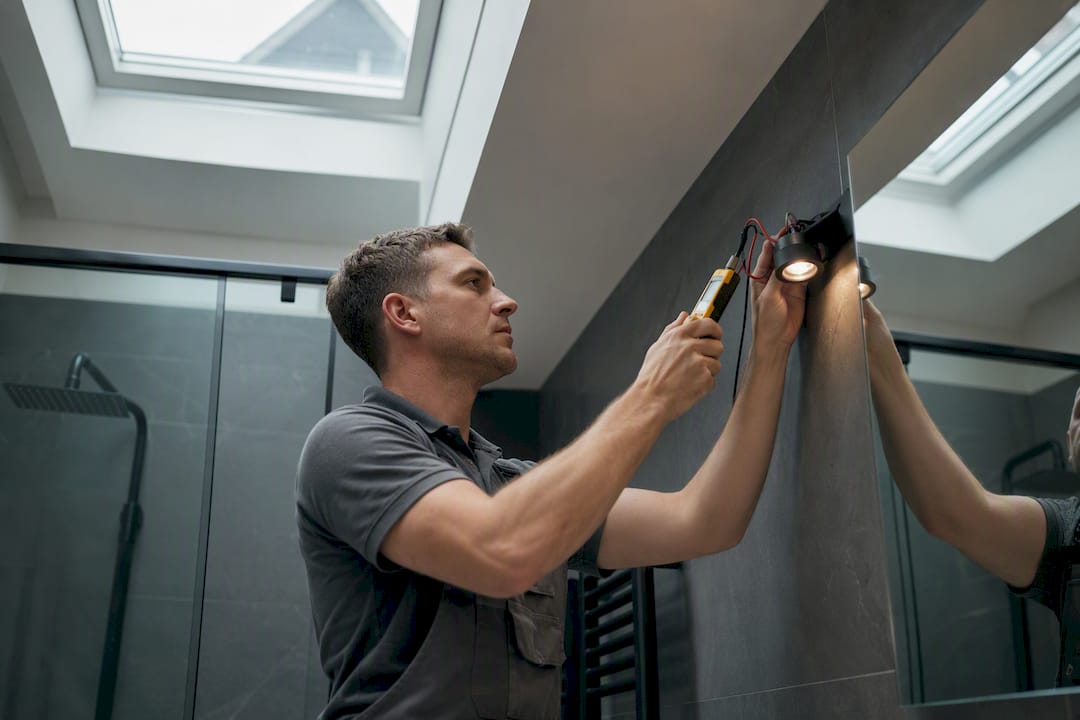
Because this is notifiable work, insist on a registered electrician who will either self-certify through a competent person scheme or notify local building control directly.
IP44 or IP65: Which Rating Should You Actually Buy?
IP44 will pass an inspection in Zones 1 and 2, but “will pass” and “should buy” aren’t the same thing. Steam behaves unpredictably in a small bathroom, drifting well past where the regulations technically require higher protection, which is why many installers fit IP65 fittings across the entire ceiling rather than switching ratings fitting by fitting depending on which side of an invisible zone line they sit on. It’s a small cost difference upfront that avoids corroded fittings and flickering lights three years down the line.
- Shower ceilings: go IP65 even if the exact spot is technically Zone 2, since condensation doesn’t respect zone boundaries.
- Extractor fans: most quality units carry IP44 or higher as standard, but always confirm the datasheet rather than assuming.
- Mirror cabinets: anything with an internal socket or light strip near a basin should be rated at least IP44, and the manufacturer’s own instructions should confirm bathroom suitability explicitly.
- Basic pendant or IP20 fittings: fine outside the zones, a liability everywhere else.
Cost, longevity, and looks always pull against each other. A cheaper IP44 downlight might save you £5 each on a ten-light ceiling, but if half of them fail within two years from steam ingress, you’ve paid for the callout twice.
Your Checklist Before Buying or Signing Off Bathroom Fittings
Work through this before any fitting goes on the wall, whether you’re buying it yourself or standing in the bathroom with your electrician:
- Measure and map your zones. Know exactly where Zone 0, 1, and 2 fall in your specific layout, including any 1.2 meter allowance for a tray-less shower.
- Check the datasheet, not the packaging. Confirm the actual IP rating and manufacturer suitability statement for bathroom use.
- Confirm SELV where relevant. Anything going into Zone 0 must run on a 12V SELV supply.
- Verify RCD protection and bonding. Every bathroom circuit needs 30mA RCD cover, and supplementary bonding should be checked too.
- Get the paperwork. Request an electrical installation certificate and confirmation of Part P notification or self-certification.
Pro Tip: Photograph every product label and datasheet before installation, and keep the certificate with your home’s paperwork. It’s the first thing a buyer’s surveyor or insurer will ask for.
What a Compliant Bathroom Installation Actually Looks Like
A reliable installer doesn’t guess at IP ratings on site. Jmplumbingservicesltd’s approach on bathroom projects across Cardiff and the Vale of Glamorgan starts with a proper zone check before a single fitting is chosen, followed by selecting products rated to at least the Section 701 minimum for that spot, confirming RCD protection and bonding, and finishing with testing and a signed certificate.
Ask any installer, before they start: which IP rating are you specifying for each zone, and will I get a test certificate at the end? If the answer is vague, that’s a red flag worth acting on.
Before hiring anyone for a bathroom renovation, request to see:
- Their electrician’s registration or scheme membership.
- The IP ratings they plan to specify per zone.
- Confirmation that a certificate will be issued on completion.
If you’re planning a renovation and want that process handled properly from the first site visit, our bathroom installation and renovation service in Penarth and across Cardiff walks through zoning and compliance with you before any fitting is ordered. You can also see our full range of bathroom installation services in Cardiff.
The Gap Between “Legal Minimum” and “Actually Lasts”
Most guidance on this topic stops at the regulatory floor: IP44 here, IPX7 there, job done. That’s technically accurate and practically incomplete. The regulations tell you what won’t get you flagged by an inspector; they don’t tell you what survives five years of daily showers in a room with poor ventilation.
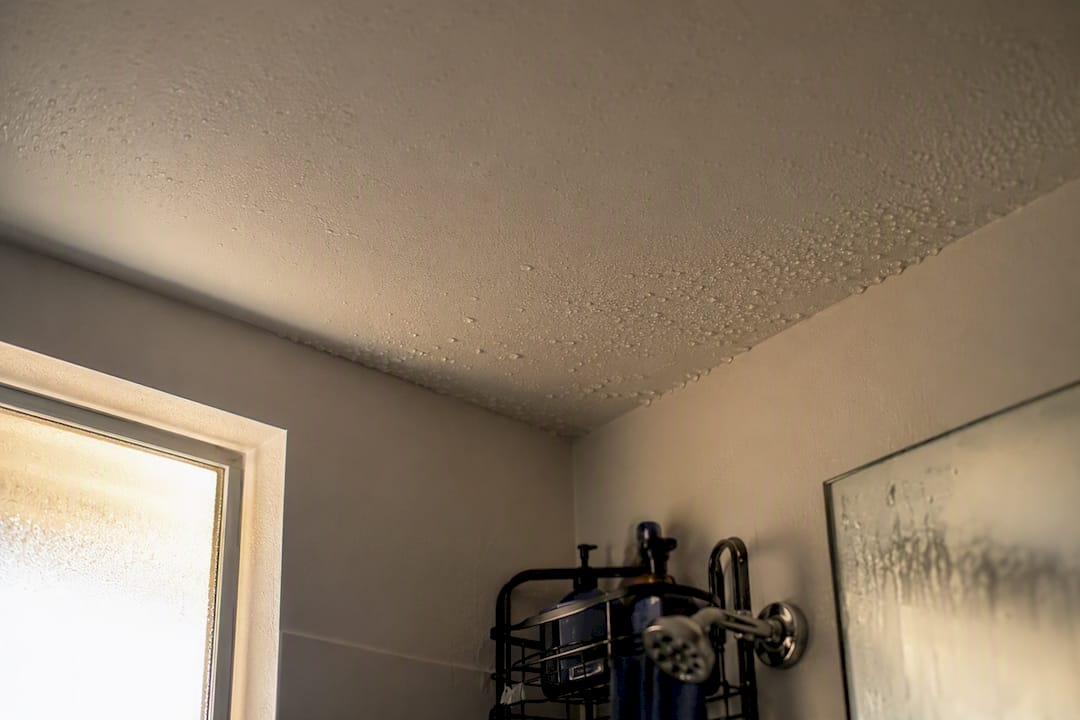
The advice that gets underweighted is the steam problem. Zone boundaries are drawn on paper as clean lines, but condensation doesn’t stop at 2.25 meters. That’s the real argument for treating an entire small bathroom ceiling as Zone 1 territory regardless of what the tape measure says, and it’s the detail I’d prioritize over almost anything else in this guide.
The second underrated point is paperwork. Homeowners fixate on the fitting and forget the certificate, yet that document is what protects you at resale and in an insurance claim. A correctly rated light with no certificate is still a liability on paper, even if it never fails.
Frequently Asked Questions
What IP rating do I need for a bathroom overall? There’s no single answer for the whole room. It depends on zone: IPX7 with SELV in Zone 0, IPX4 minimum in Zones 1 and 2 (IPX5 if jets are likely), and no strict requirement outside the zones.
Is IP44 or IP65 better for a bathroom? IP44 meets the legal minimum for Zones 1 and 2, but IP65 handles steam and condensation better over time, which is why it’s the common choice for shower ceilings even where it’s not strictly required.
Can I use an IP20 light in a bathroom? Only outside Zones 0, 1, and 2. IP20 fittings offer no water ingress protection and corrode quickly in a humid space, so they don’t belong anywhere near a bath, shower, or basin.
Do I need an electrician for bathroom lighting work? Yes. This is notifiable work under Part P, and a registered electrician needs to self-certify the job or notify local building control, then hand you a certificate confirming the work meets Section 701.
What’s the difference between IP44 and IPX4? Nothing that matters for water resistance. The “X” simply means the dust/solid-object rating wasn’t tested; the water protection level is identical.
Sources
- Section 701 - Locations containing a bath or shower
- IP ratings for bathroom lights
- Bathroom Lighting Zones & IP Ratings