
LVT Bathroom Flooring for Cardiff Homes: 2026 Guide
Discover the benefits of LVT bathroom flooring for Cardiff homes in 2026. Enjoy a waterproof, low-maintenance floor that outperforms ceramic tile.
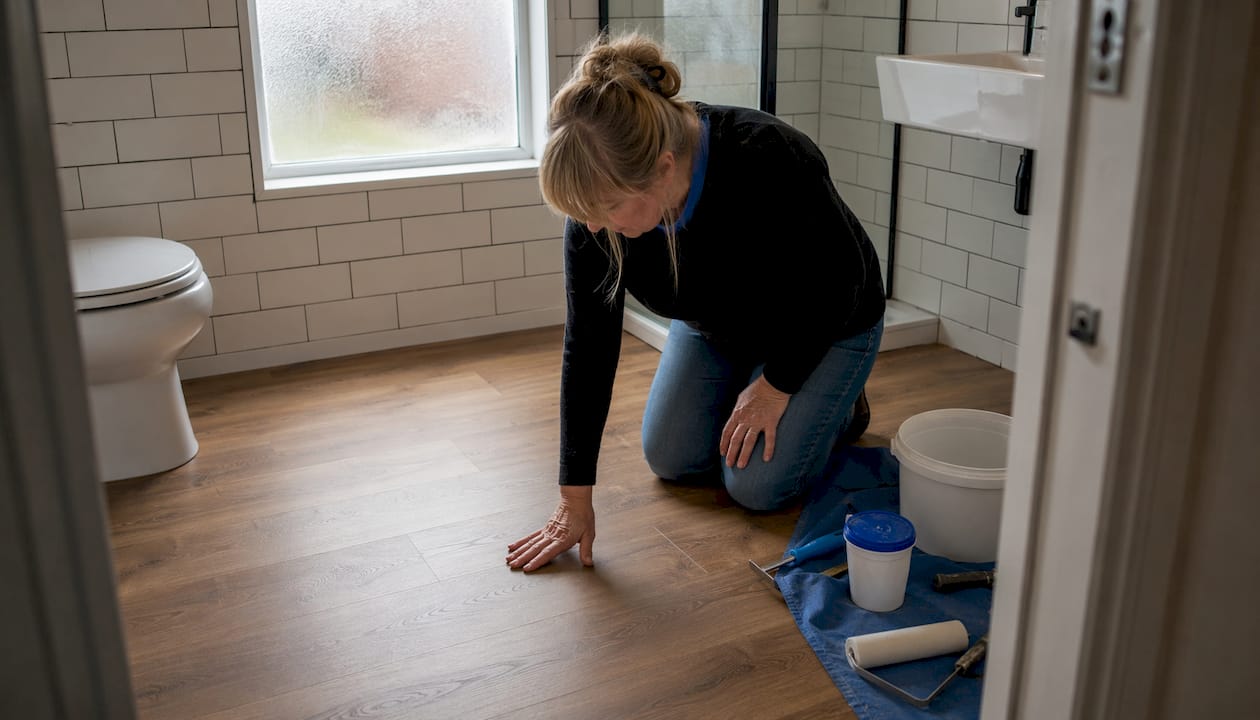
For most bathrooms in Cardiff and the Vale of Glamorgan, luxury vinyl tile (LVT) is the right call — provided you specify a sufficiently thick wear layer appropriate for family bathrooms and have it glue-down installed by a qualified local contractor. That combination delivers a fully waterproof, warm, low-maintenance floor that outperforms ceramic tile on almost every practical measure. Jmplumbingservicesltd handles exactly this type of installation across Cardiff and the Vale, from initial survey through to sealed, warranted handover.
Three things to confirm before you sign any quote:
- Wear layer: ≥28 mil (0.7mm) for family bathrooms and en-suites
- Installation method: glue-down for any room with a shower, bath, or wet room
- Installer: ask for written confirmation of both the above, plus a workmanship warranty
Table of Contents
- Is LVT the right bathroom floor for you?
- Which LVT specs actually matter for bathrooms?
- Glue-down vs click-lock: which installation method is right?
- How do you clean and maintain bathroom LVT?
- What does LVT bathroom installation cost in Cardiff and the Vale?
- How do you pick a reliable LVT installer in Cardiff?
- Jmplumbingservicesltd: local LVT bathroom installations in Cardiff and the Vale
- Key Takeaways
- Why glue-down LVT makes sense for Cardiff bathrooms
- Book a survey with Jmplumbingservicesltd
- Useful sources and manufacturer references
Is LVT the right bathroom floor for you?
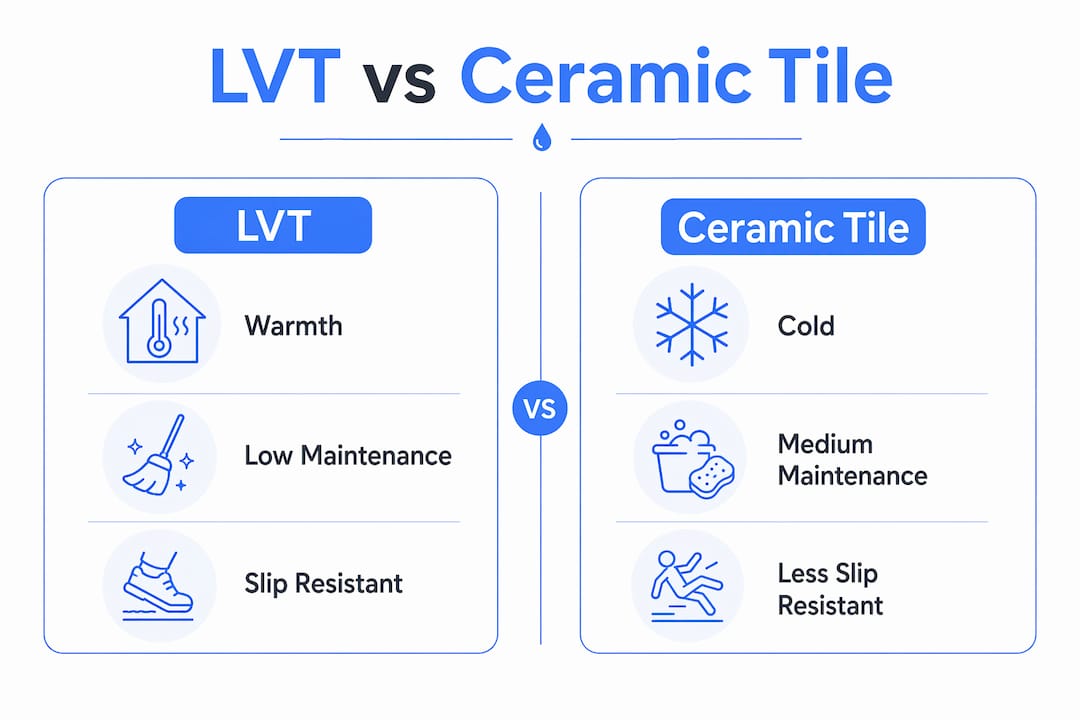
LVT has overtaken ceramic tile in many UK residential bathroom specifications, and the reasons are straightforward: it’s warmer underfoot, quieter, faster to install, and fully waterproof when correctly specified. Ceramic tile is cold, grout lines trap moisture and mold, and a dropped shampoo bottle can crack a tile. LVT absorbs impact, needs no grout, and cleans in minutes.
Pros:
- Fully waterproof at the tile level
- Warm and comfortable underfoot compared to stone or ceramic
- No grout to scrub, seal, or re-color
- Faster installation than tile (no mortar cure time)
- Compatible with underfloor heating
Cons:
- Typical lifespan generally shorter than stone, which can last a generation
- Seam management is critical; poorly sealed joints allow water to wick underneath
- Never use standard cement-based grout with LVT — it will crack as the vinyl expands and contracts
| Feature | LVT | Ceramic Tile |
|---|---|---|
| Warmth underfoot | Warm | Cold |
| Maintenance | Low (no grout) | Medium (grout sealing) |
| Durability | 15–25 years | 15–25 years |
| Waterproofing | Fully waterproof (tile level) | Waterproof surface, porous grout |
| Cost | Lower material + labour | Higher (mortar, grout, longer install) |
High-quality LVT is now viewed positively by homebuyers — premium vinyl signals a move-in-ready, well-maintained bathroom, and buyers in 2026 expect waterproof finishes in wet areas. Grosvenor Flooring, a UK flooring specialist, positions LVT as the practical standard for modern residential bathrooms precisely because it meets that expectation without the grout maintenance burden.
Which LVT specs actually matter for bathrooms?
Getting the spec right is where most homeowners go wrong. The product on the shelf looks fine; the difference is in the numbers on the datasheet.
Wear layer is the most important figure. The expert recommendation for high-traffic bathrooms is 28 mil (0.7mm) minimum. Common residential thresholds run 0.3mm (light use), 0.55mm (standard), and 0.7mm (heavy use/family bathrooms). For a family bathroom or en-suite with daily shower use, 0.7mm is the floor, not the ceiling.
Core type determines where the product belongs:
- Glue-down flexible LVT (2–3mm total): thinnest profile, most realistic tile appearance, best for full bathrooms and wet rooms where a fully bonded surface is required
- Rigid-core SPC/WPC (click-lock): suitable for cloakrooms and low-splash areas; click joints are not sealed, making them a potential failure point in high-moisture zones
Slip resistance matters more in bathrooms than anywhere else. R10 is the common residential minimum; textured or embossed surfaces improve grip in higher-risk bathrooms.
Underfloor heating (UFH): most LVT ranges are compatible, but the heating must be switched off 48 hours before installation and brought back up gradually after adhesive cure. Always check the product datasheet for the maximum surface temperature — Amtico, for example, specifies a 27°C ceiling.
| Specification | Why It Matters | What to Request |
|---|---|---|
| Wear layer | Determines scratch/stain resistance and lifespan | ≥0.7mm (28 mil) for family bathrooms |
| Core type | Affects waterproofing and installation method | Glue-down flexible for full bathrooms |
| Slip rating | Safety on wet floors | R10 minimum; textured finish preferred |
| UFH compatibility | Prevents warping or delamination | Confirm max surface temp on datasheet |
Spec checklist for comparing quotes:
- Wear layer confirmed in writing (mm and mil)
- Core type and total thickness stated
- Slip resistance rating included
- UFH compatibility confirmed if applicable
- Adhesive type and manufacturer named
Glue-down vs click-lock: which installation method is right?
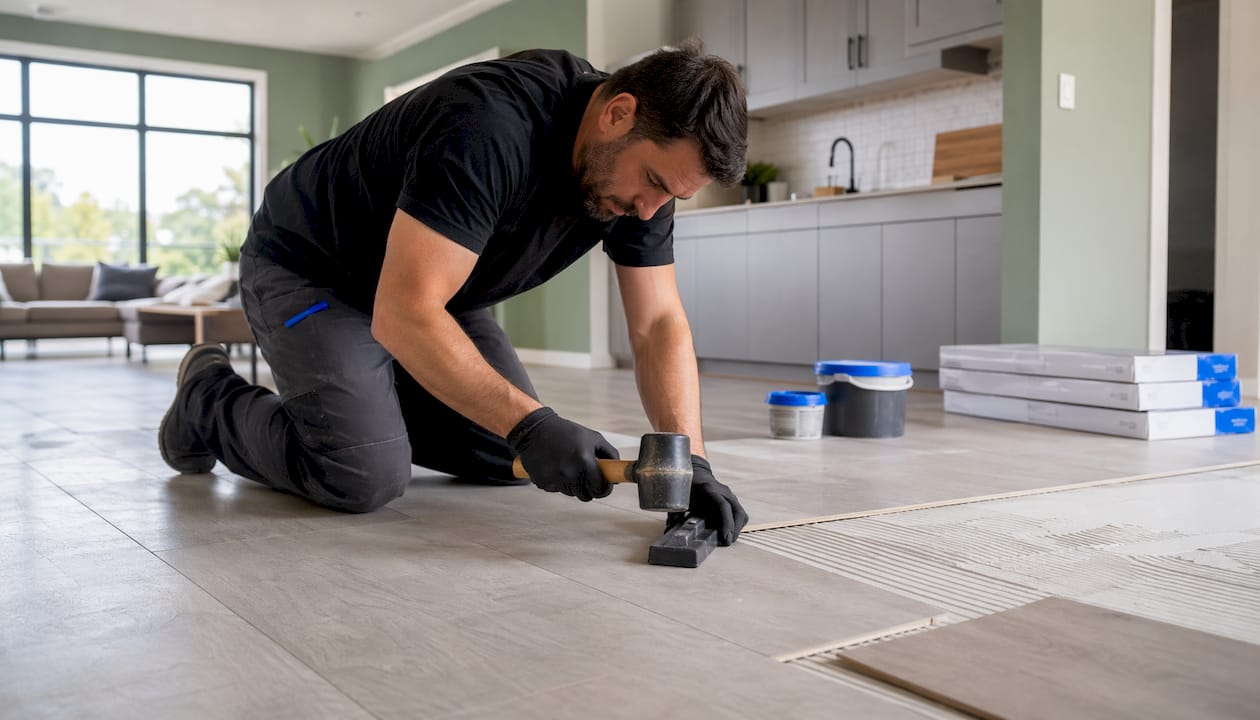
Glue-down is the professional standard for full bathrooms, en-suites, and wet rooms. The adhesive bonds each tile directly to the subfloor, creating a continuous sealed surface with no floating joints for water to penetrate. Click-lock is acceptable for cloakrooms or low-splash areas where moisture exposure is minimal.
Subfloor preparation is where installations succeed or fail. Glue-down flexible LVT telegraphs every imperfection in the subfloor, so the surface must be flat, clean, and dry before a single tile goes down. Perimeters and all penetrations — around the toilet base, bath, and sink — must be sealed with high-quality silicone after installation.
Typical installation sequence:
- Site survey and moisture test (1 day)
- Remove sanitary ware (toilet, pedestal, bath panel) as required
- Subfloor leveling and priming (1–2 days, including drying time)
- Apply adhesive with manufacturer-specified trowel notch; lay tiles
- Roll the floor with a 68kg roller to ensure full bond
- Silicone seal all perimeters and penetrations
- Cure period before light traffic (follow adhesive datasheet — typically 24 hours)
- Refit sanitary ware and final inspection
A standard Cardiff bathroom typically runs 3–5 working days from prep to handover, depending on subfloor condition and whether plumbing moves are involved.
Pro Tip: Ask the installer to write the adhesive manufacturer’s name, trowel notch size, and open time directly into the quote. A contractor who cannot or will not do this has likely not read the adhesive datasheet — and that is a red flag.
How do you clean and maintain bathroom LVT?
LVT’s maintenance advantage over tile is real and immediate. No grout means no scrubbing, no bleaching, and no re-sealing every couple of years.
Daily and weekly care:
- Sweep or vacuum to remove grit (the main cause of surface scratches)
- Mop with a pH-neutral floor cleaner and a damp (not soaking) mop
- Avoid steam mops — the heat and pressure can damage the wear layer and adhesive bond
- Wipe up standing water promptly; even waterproof LVT should not sit in pooled water long-term
Lifespan and what shortens it: quality LVT in a well-prepared bathroom typically lasts 15–25 years. The factors that cut that short are poor subfloor prep (movement causes seam failure), a wear layer below 0.7mm, and standing water at unsealed perimeters. A contractor who skips the silicone seal step is setting the floor up for early failure.
Warranty checklist to request:
- Manufacturer’s wear-layer warranty (duration and conditions)
- Installer’s workmanship warranty (minimum 12 months; ask for longer)
- Confirmation that warranty is void if cement grout is used
What does LVT bathroom installation cost in Cardiff and the Vale?
Installed costs vary depending on product quality, subfloor condition, and whether plumbing work is involved. Published installed-cost ranges span from budget-end LVT with basic prep through to premium glue-down ranges with full subfloor remediation — which is why itemized quotes matter more than headline prices.
Main cost drivers:
- Wear-layer specification (0.3mm vs 0.7mm products carry very different material costs)
- Glue-down vs click-lock (glue-down requires more labour and adhesive)
- Subfloor condition (leveling compound, ply overlay, or removal of existing tile adds cost)
- Plumbing moves or sanitary ware removal and refitting
- Wet room tanking if a full waterproofing system is required
- UFH commissioning or compatibility checks
Local timeline for a standard Cardiff bathroom:
- Site survey: 1 day
- Materials ordered and delivered: 3–7 working days (depending on LVT range)
- Prep and installation: 3–5 working days
- Cure and handover: 1 day
Always request an itemized quote that separates materials, adhesive, subfloor prep, and labour. A single lump-sum price makes it impossible to compare quotes sensibly or identify where corners might be cut.
How do you pick a reliable LVT installer in Cardiff?
Pre-qualification checklist (phone or email):
- Do you carry public liability insurance? Can you provide the certificate?
- Can you share two or three local bathroom projects with photos and client references?
- Do you specify glue-down installation for full bathrooms?
- Which adhesive manufacturer do you use, and will you include the datasheet in the quote?
- Do you provide a written workmanship warranty?
- Are you VAT-registered?
Contract items to insist on:
- Itemized scope: materials, adhesive, subfloor prep, and labour listed separately
- Wear-layer specification confirmed in writing (mm and mil)
- Adhesive type and trowel notch specified
- Silicone sealing of all perimeters included in scope
- Warranty terms for both product and workmanship
Red flags:
- Fixed-price quote given without a site visit
- No insurance or VAT details provided on request
- Unwillingness to share local references or project photos
- Cement grout mentioned anywhere in the quote for LVT
Pro Tip: Require the installer to list subfloor remediation as a separate line item. If the subfloor needs leveling compound or a ply overlay, that cost should be visible — not buried in a contingency or discovered on installation day.
Thinking about whether your bathroom is ready for a renovation? The signs it’s time to renovate are often more obvious than homeowners realize.
Jmplumbingservicesltd: local LVT bathroom installations in Cardiff and the Vale
Jmplumbingservicesltd covers bathroom installations across Cardiff and the Vale of Glamorgan, including Penarth, Cowbridge, Dinas Powys, and Rhoose. Their service scope for LVT bathroom projects includes:
- Full bathroom installation and renovation
- Wet room installation with tanking and waterproofing systems
- LVT flooring supply and glue-down installation
- Plumbing repairs, sanitary ware removal, and refitting
- Tiling and design consultation
The typical homeowner experience runs: site survey → written itemized quote → scheduled start date → subfloor prep → LVT installation → silicone sealing → sanitary ware refit → handover with warranty documentation.
Trust signals to request and expect from Jmplumbingservicesltd: public liability insurance certificate, workmanship warranty in writing, and local project references with photos.
Pairing quality LVT flooring with the right interior bathroom doors is one of the details that lifts a renovation from functional to genuinely finished.
Key Takeaways
For Cardiff and Vale bathrooms, the right LVT specification and a glue-down installation by a vetted local contractor is the most reliable path to a waterproof, low-maintenance floor that lasts.
| Point | Details |
|---|---|
| Wear layer minimum | Specify ≥28 mil (0.7mm) for family bathrooms and en-suites — anything less shortens lifespan. |
| Glue-down for full bathrooms | Glue-down creates a fully bonded surface; click-lock joints are unsealed and unsuitable for shower zones. |
| Subfloor prep is non-negotiable | Poor leveling causes seam failure; insist on subfloor remediation as a separate quote line item. |
| Maintenance is straightforward | pH-neutral cleaner, no steam mops, and prompt silicone re-sealing if gaps appear at perimeters. |
| Jmplumbingservicesltd | Covers Cardiff and the Vale with glue-down LVT installation, written warranties, and itemized quotes. |
Why glue-down LVT makes sense for Cardiff bathrooms
Cardiff’s housing stock skews older. Victorian terraces, Edwardian semis, and 1960s builds all share one characteristic: subfloors that have moved, settled, and been overlaid more than once. That history matters when you’re choosing a flooring system.
Click-lock SPC floats over the subfloor, which sounds convenient until you factor in the humidity cycles a Cardiff bathroom sees — morning showers, evening baths, condensation on cold days. A floating floor in that environment can shift subtly over time, and when it does, the unsealed click joints become water entry points. Glue-down eliminates that variable entirely. The tiles are bonded in place; there is no movement, no joint gap, and no path for moisture to travel under the floor.
Supply lead times in the Cardiff area typically run 3–7 working days for standard LVT ranges, though premium or bespoke products can take longer. That’s worth factoring into your project schedule, particularly if you’re coordinating a bathroom renovation around a family’s routine.
Before any survey, ask the installer to bring the product datasheet and adhesive technical data sheet. A contractor who arrives without them is working from memory, not specification.
Book a survey with Jmplumbingservicesltd
Jmplumbingservicesltd offers site surveys for homeowners across Cardiff and the Vale of Glamorgan — covering Cardiff city, Penarth, Cowbridge, Dinas Powys, Rhoose, and surrounding areas. A survey includes a subfloor check and moisture test, product recommendation (wear-layer, core type, and adhesive), and a written itemized quote with warranty wording.
Contact options are available through the Cardiff bathroom installation page or the Penarth service page for Vale of Glamorgan homeowners. Quotes are typically returned within 2–3 working days of the survey, and LVT materials are ordered only after written acceptance — so lead times are confirmed before work begins, not after.
Useful sources and manufacturer references
When comparing contractor quotes, ask for the following documents before signing:
- Product datasheet: confirms wear-layer thickness, UFH compatibility, and maximum surface temperature
- Adhesive technical data sheet: specifies trowel notch, open time, cure schedule, and rolling procedure
- Manufacturer warranty document: states coverage period, conditions, and what voids the warranty
Core references used to build the recommendations in this guide:
- Grosvenor Flooring — Best Bathroom Flooring UK: glue-down vs click-lock guidance and UK residential specification standards
- D and G Flooring — LVT Flooring for Bathrooms: flexible grout requirements and installation best practices
- D and G Flooring — Complete LVT Guide: subfloor tolerances, cost ranges, and buyer perception data
- Harvey Maria — How to Lay LVT in a Bathroom: perimeter sealing, UFH protocols, and adhesive procedures
- Onsun WPC — Pros and Cons of LVT Flooring: wear-layer specification guidance