
No Hot Water in Your Shower? Fix It Fast
Experiencing a no hot water shower? Discover quick fixes and expert tips to restore hot water fast. Learn how to troubleshoot today!
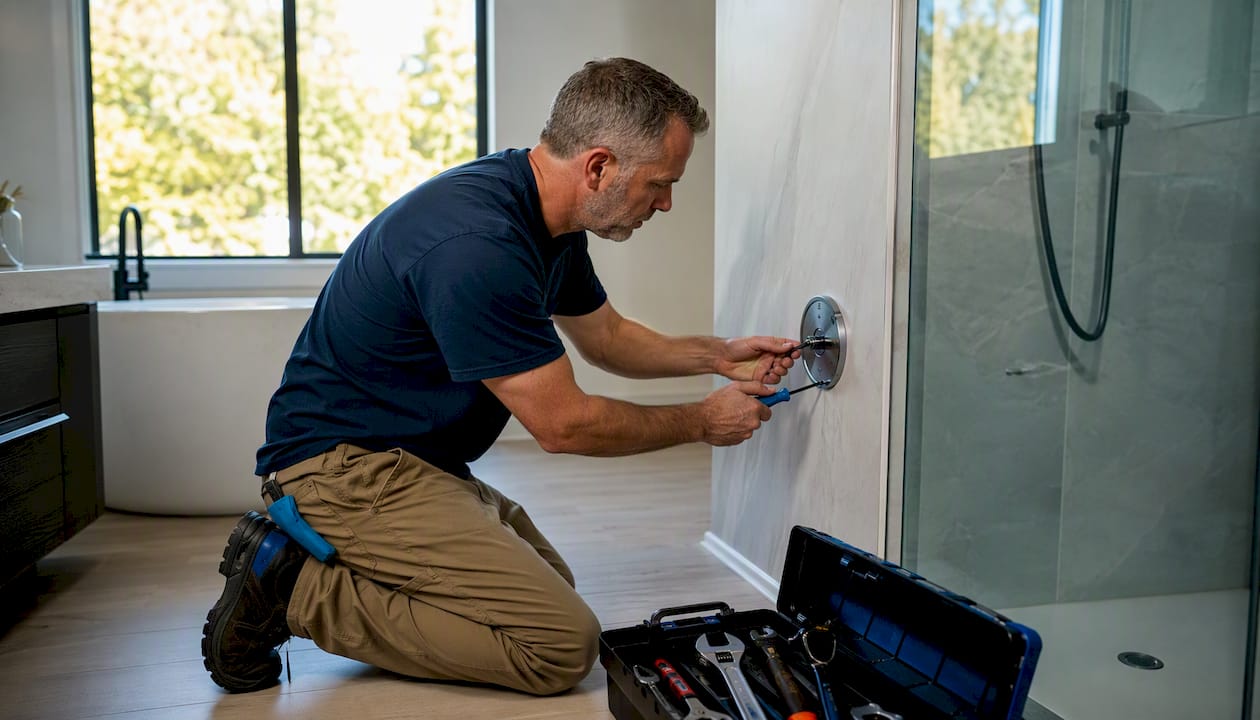
If your shower has no hot water, the fastest way to narrow it down is to open a hot tap somewhere else in the house. If every tap runs cold, the fault is almost certainly at the water heater — a tripped breaker, a pilot light that’s gone out, or a failed element. If the kitchen tap runs hot but your shower stays cold, the problem is almost always inside the shower itself: a worn cartridge, a stuck diverter, or a faulty thermostatic valve.
Most no-hot-water diagnoses are completable in under 30 minutes if you follow the checks in order. Gas and live electrical work are the hard stops — never go past those yourself.
Quick actions before you read further: check another hot tap, look at your circuit breaker panel, glance at the boiler display for error codes, and if you smell gas, leave the property immediately and call the National Gas Emergency Service on 0800 111 999.
JM Plumbing Services Ltd covers Cardiff and the Vale of Glamorgan for exactly these situations. For anything involving a Gas Safe-registered engineer, that’s the right call — not a DIY job.
Table of Contents
- What should you check first when you have no hot water?
- How do you tell whether it’s the heater or the shower?
- Safe DIY fixes to try before calling anyone
- When should you call a plumber or Gas Safe engineer?
- Jmplumbingservicesltd: local help in Cardiff and the Vale of Glamorgan
- Key Takeaways
- A straight word on what to expect from a home visit
- Useful sources for further reading
What should you check first when you have no hot water?
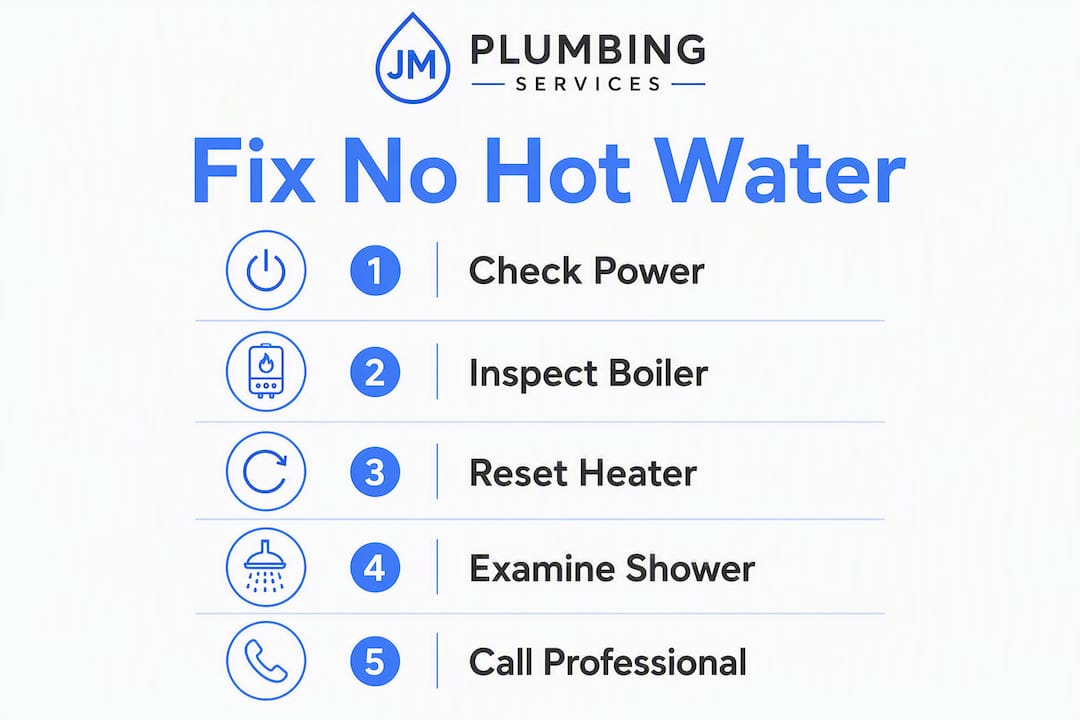
Work through these in order. Most take less than two minutes each.
Step 1 — Isolate the problem
- Open a hot tap in the kitchen and a second bathroom. Hot there, cold in the shower only? The shower fitting is the culprit. Cold everywhere? The heater has stopped.
Step 2 — Electric heaters
- Check the dedicated circuit breaker for the water heater. Flip it fully off, then back on. If it trips again immediately, stop and call a qualified electrician.
- On electric storage tanks, press the red reset button (the high-limit switch) on the heater itself. It’s usually behind a small access panel.
Step 3 — Gas heaters and combi boilers
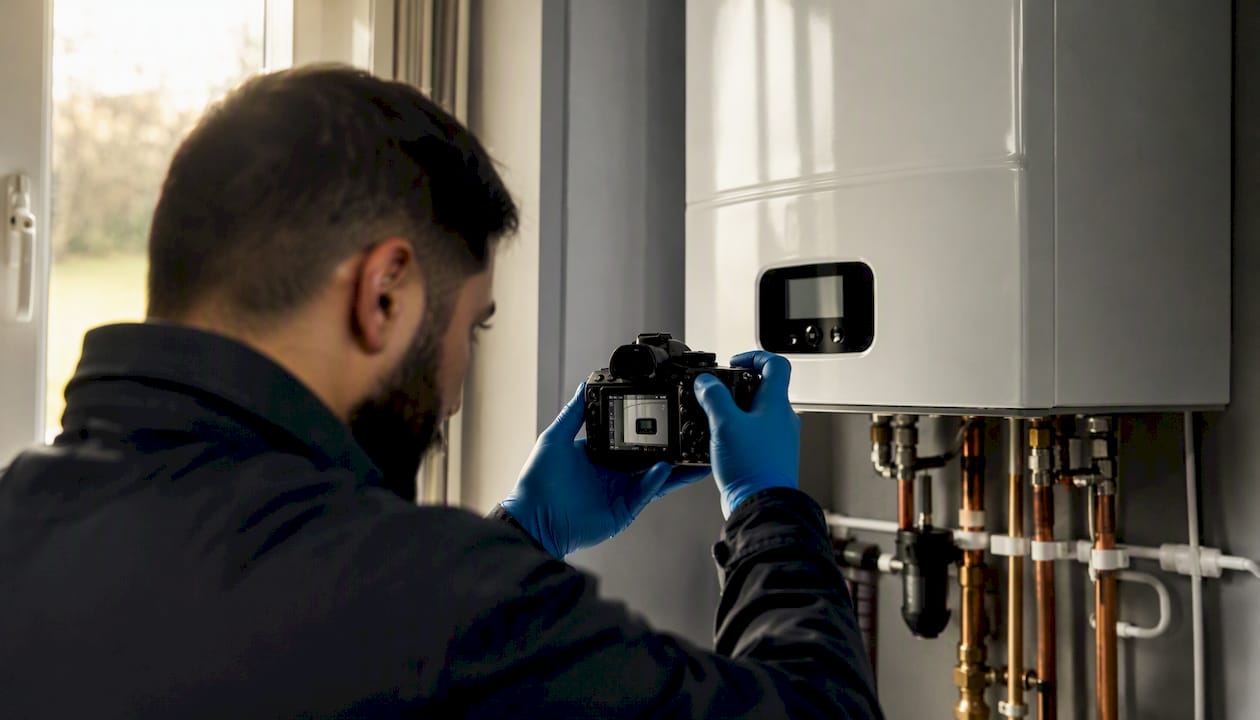
- Check the pilot light or boiler display. A fault code on the display tells you exactly what’s wrong — photograph it before calling anyone.
- If the pilot is out and there’s no gas smell, follow the relighting instructions on the label. If the pilot won’t stay lit, the thermocouple is likely failing. That needs a Gas Safe-registered engineer, not a screwdriver.
Step 4 — Instant/tankless showers
- Confirm the unit has power. Check that the showerhead isn’t blocked with limescale — a clogged head reduces flow below the minimum needed to trigger ignition.
Step 5 — Pressure and supply
- Look for sudden drops in flow or visible drips near the heater. Check that the cold mains stopcock (usually under the kitchen sink) is fully open.
Safety rule, no exceptions: if you smell gas at any point, leave the building, don’t touch any switches, and call 0800 111 999 from outside.
Pro Tip: Photograph your boiler’s error code display, the heater label, and any reset buttons before you call a plumber. A good engineer can often pre-diagnose the fault and arrive with the right part.
How do you tell whether it’s the heater or the shower?
The answer splits cleanly by symptom pattern.
When all taps are cold
The heat source has stopped entirely. The cause depends on your heater type:
- Combi boiler: no stored hot water — it heats on demand. A fault code, failed diverter valve, or ignition problem kills hot water instantly across the whole house.
- System boiler with cylinder: the cylinder stores pre-heated water. If the immersion element or its thermostat has failed, you’ll run out fast and the cylinder won’t reheat.
- Gas storage heater: a dead pilot or a failing thermocouple is the single most common cause of sudden cold water on these units.
- Electric storage tank: a tripped breaker or a burned-out element. The high-limit reset is worth trying first.
- Tankless/instant unit: needs sufficient flow to trigger ignition. Limescale jamming the flow switch is a common culprit, especially in hard-water areas like parts of the Vale of Glamorgan.
When only the shower is cold
- Thermostatic mixer valve: the cartridge inside wears out and loses its ability to blend hot water correctly. Replacing it is a straightforward plumber job.
- Diverter valve: on combination tap/shower units, a stuck diverter sends water to the wrong outlet.
- Anti-scald limit stop: these are adjustable behind the handle and are often set conservatively at installation. Rotating the stop counter-clockwise allows more hot travel — but balance this against scald risk, especially in homes with young children.
- Electric shower element or control board: if the unit powers on but water stays cold, the heating element has likely failed.
Seasonal and supply factors
Cold snaps can freeze the condensate pipe on a combi boiler — a common Cardiff winter fault. Hard water and limescale build up inside tankless units and showerheads, gradually reducing flow until the unit stops firing. A sudden drop in mains pressure (a burst main nearby, or a partially closed stopcock) can also prevent tankless units from reaching ignition threshold.
Safe DIY fixes to try before calling anyone
These are homeowner-safe. Everything below the line is not.
- Reset the breaker on an electric heater: off, then on. One attempt only.
- Press the high-limit reset button on electric storage tanks. It’s red, usually behind a small panel. If it trips again within minutes, the element has likely failed.
- Set the thermostat on your water heater to around 49°C (120°F). Higher risks scalding; lower risks bacterial growth.
- Descale the showerhead: unscrew it, soak in white vinegar for an hour, rinse. Limescale buildup is a leading cause of reduced flow and blocked inlet filters on tankless units.
- Clear inlet filters on tankless units: isolate the water supply, unscrew the filter screen, rinse under a tap, refit.
- Relight a gas pilot only if there’s no gas smell and you’re comfortable following the label instructions exactly. Stop immediately if the pilot won’t stay lit — that’s a thermocouple job.
- Flush a storage tank annually (or every two years in hard-water areas): turn off power or gas, isolate the cold feed, attach a hose to the drain valve, and run until the water clears. Always follow the manufacturer’s instructions and confirm power is off before you start.
The line you don’t cross: never open gas valves, touch burner components, or work on live electrical wiring. A repeated tripped breaker is a warning, not an inconvenience — it means something is drawing too much current or has shorted.
Pro Tip: If your shower cartridge is the issue, note the brand and model number stamped on the cartridge body before ordering a replacement. Cartridges are not universal, and the wrong one won’t seat correctly.
When should you call a plumber or Gas Safe engineer?
Call immediately for:
- Any smell of gas
- Visible water leaking from the heater body or connections
- Electrical sparking or burning smell near the unit
- A breaker that trips again the moment you reset it
Call soon (non-emergency but don’t delay):
- Pilot that won’t stay lit — likely a failed thermocouple or gas control valve
- Broken diverter or mixing valve that you can’t access without opening the wall
- Immersion element replacement (requires isolating the cylinder and working with live circuits once drained)
- Tank corrosion, discolored water, or a rumbling noise from the heater
What a professional will inspect: boiler ignition sequence and controls, gas valve and thermocouple condition, heating elements and thermostats, shower cartridge and mixer valve, inlet filters, flue and ventilation clearances, and system pressure and flow measurements.
For Cardiff and Vale of Glamorgan homeowners: gas work must be carried out by a Gas Safe-registered engineer. Electrical faults on heaters require a qualified electrician. JM Plumbing Services Ltd coordinates these jobs locally and can advise on whether repair or replacement is the better call for your system.
On typical UK response times: emergency gas call-outs are prioritized and often same-day. Most local plumbing repairs — a cartridge swap, an element replacement, a diverter fix — are same-day to 48 hours depending on parts availability. Full tank replacements take longer when the unit needs ordering.
Jmplumbingservicesltd: local help in Cardiff and the Vale of Glamorgan
When a cold shower turns out to be more than a quick reset, you want someone who knows the area and arrives with the right parts.
Jmplumbingservicesltd covers Cardiff and the Vale of Glamorgan for plumbing repairs, shower valve replacements, bathroom upgrades, and full renovations. The team handles the diagnostic work on-site — checking your shower cartridge, mixer valve, or electric shower unit — and gives you a written quote before any work begins. For gas-related faults, they coordinate with Gas Safe-registered engineers so you’re not managing multiple contractors. Homeowners across Cardiff, Penarth, Barry, and the wider Vale regularly use the service for exactly these kinds of jobs: fast, fixed-price, and no guesswork about who’s responsible for what. Get in touch for an on-site diagnosis and a straight answer about whether repair or replacement makes more sense for your setup.
Key Takeaways
When your shower has no hot water, the single fastest diagnostic step is checking whether other taps in the house are also cold — that one test separates a heater fault from a shower-specific fault and points you to the right fix immediately.
| Point | Details |
|---|---|
| All taps cold | Suspect the water heater — check the breaker, pilot light, or boiler error code first. |
| Only the shower cold | Suspect the cartridge, mixer valve, diverter, or electric shower element — try descaling before calling anyone. |
| Gas and electrical limits | Never work on gas controls or live wiring yourself; call a Gas Safe-registered engineer or qualified electrician. |
| Maintenance prevents recurrence | Flush storage tanks annually, descale showerheads regularly, and fit inline filters in hard-water areas. |
| Local professional help | Jmplumbingservicesltd provides on-site diagnosis and repair across Cardiff and the Vale of Glamorgan. |
A straight word on what to expect from a home visit
Most homeowners brace for the worst when a plumber arrives. In practice, the majority of no-hot-water calls resolve faster than people expect. An engineer will ask a few quick questions — when did it stop, has it happened before, any recent work done in the bathroom — and those answers usually point straight to the likely cause before they’ve even opened a panel.
The fixes that happen on the day are usually a cartridge swap, a thermocouple replacement, or a descale and filter clean. The ones that take longer are tank replacements or parts that need ordering. A good engineer will tell you upfront which category you’re in, explain the repair-versus-replace decision honestly, and hand you a written quote before touching anything. No surprises.
What causes avoidable delays is homeowners not knowing the make and model of their boiler or shower unit. Write it down now — it’s on a label on the unit itself — and you’ll save time when you call.
Useful sources for further reading
These are the sources worth bookmarking if you want to go deeper on any part of this topic.
- JM Plumbing Services — Plumber Cardiff: local contact page for Cardiff and Vale of Glamorgan homeowners who need an on-site engineer.
- JM Plumbing Services — Bathroom Renovation Cardiff: useful if repeated hot-water failures are pointing toward a full bathroom upgrade rather than another repair.
A note on gas safety: the Gas Safe Register is the UK’s official list of qualified gas engineers. Always verify your engineer’s registration at gassaferegister.co.uk before any gas work begins. This article is general guidance, not professional advice — confirm current safety requirements with a qualified engineer or the Gas Safe Register directly.