
Why Your Toilet Keeps Running and How to Fix It
Is your toilet keeps running? Discover quick fixes for common issues like flapper leaks or fill valve failures to save water and money.
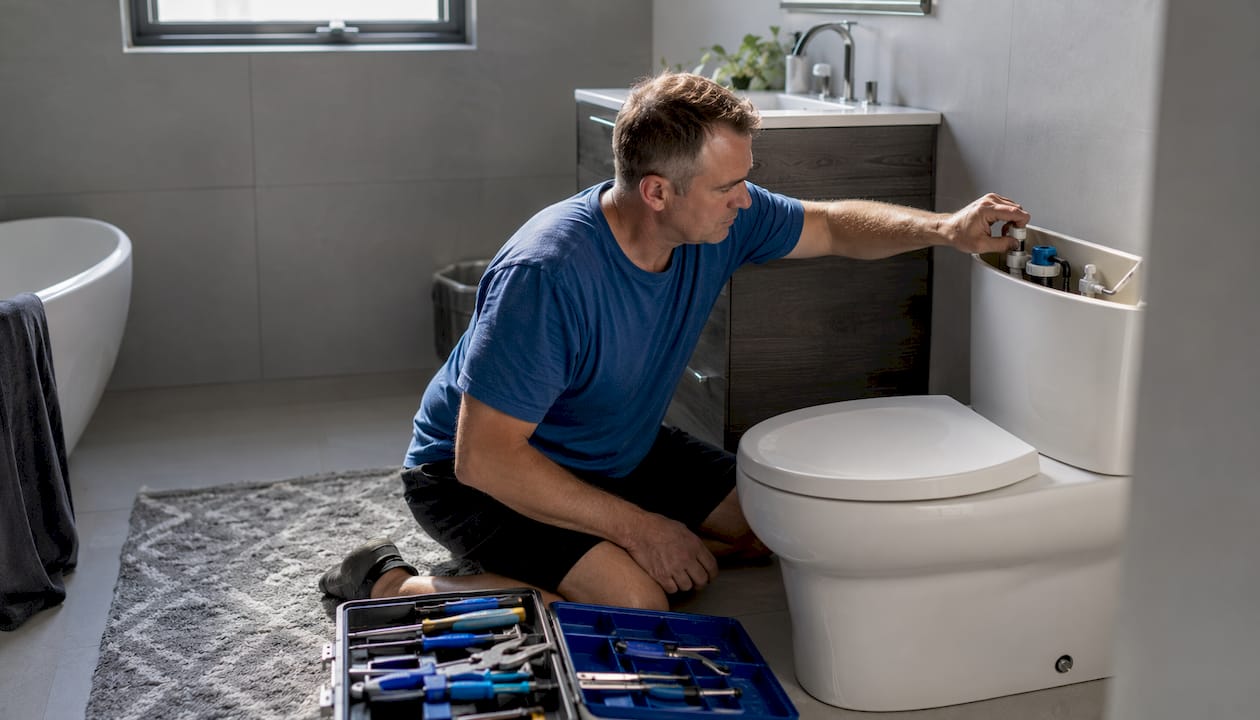
Why your toilet keeps running and what to do right now
A toilet keeps running when one of three internal parts fails to do its job after a flush: the flapper doesn’t seal, the fill valve doesn’t shut off, or the flush valve leaks water into the bowl. The result is a constant hiss or trickle that never stops, and your water meter keeps spinning.
The good news is that most of these faults are fixable in under an hour with basic tools and a replacement part that costs a few pounds. Here’s what you’re likely dealing with:
- Faulty flapper: The rubber disc at the base of the cistern has warped or worn, letting water leak continuously into the bowl. This is the most common cause.
- Fill valve failure: The valve that refills the cistern after a flush is stuck open, clogged with limescale, or has a perished internal washer.
- Flush valve leak: Water escapes past the flush valve seal, preventing the cistern from holding a full charge.
- Float set too high: The float arm or float cup is positioned too high, so water spills into the overflow tube rather than triggering a shutoff.
- Overflow tube issue: If the water level sits above the overflow pipe, water drains constantly into the bowl.
Before touching anything inside the cistern, turn off the water at the isolation valve, which is the small screw or lever on the pipe feeding the toilet. Slot inline with the pipe means open; slot across means closed. Flush once to empty the cistern, then you’re safe to work. Skipping this step turns a ten-minute job into a wet floor situation.
A running toilet wastes a significant volume of water every month, pushing up utility bills well beyond what most homeowners expect. Fixing it promptly is one of the simplest ways to cut household water costs.
Table of Contents
- What’s actually inside your toilet cistern
- Tools and materials you’ll need before you start
- Step-by-step fixes for each common cause
- How much water and money a running toilet actually wastes
- When to call Jmplumbingservicesltd for your running toilet
- Jmplumbingservicesltd: expert plumbing help across Cardiff and the Vale
- Key Takeaways
What’s actually inside your toilet cistern
Understanding the parts makes diagnosis much faster. The cistern looks complicated when you first lift the lid, but there are really only four or five components doing all the work.
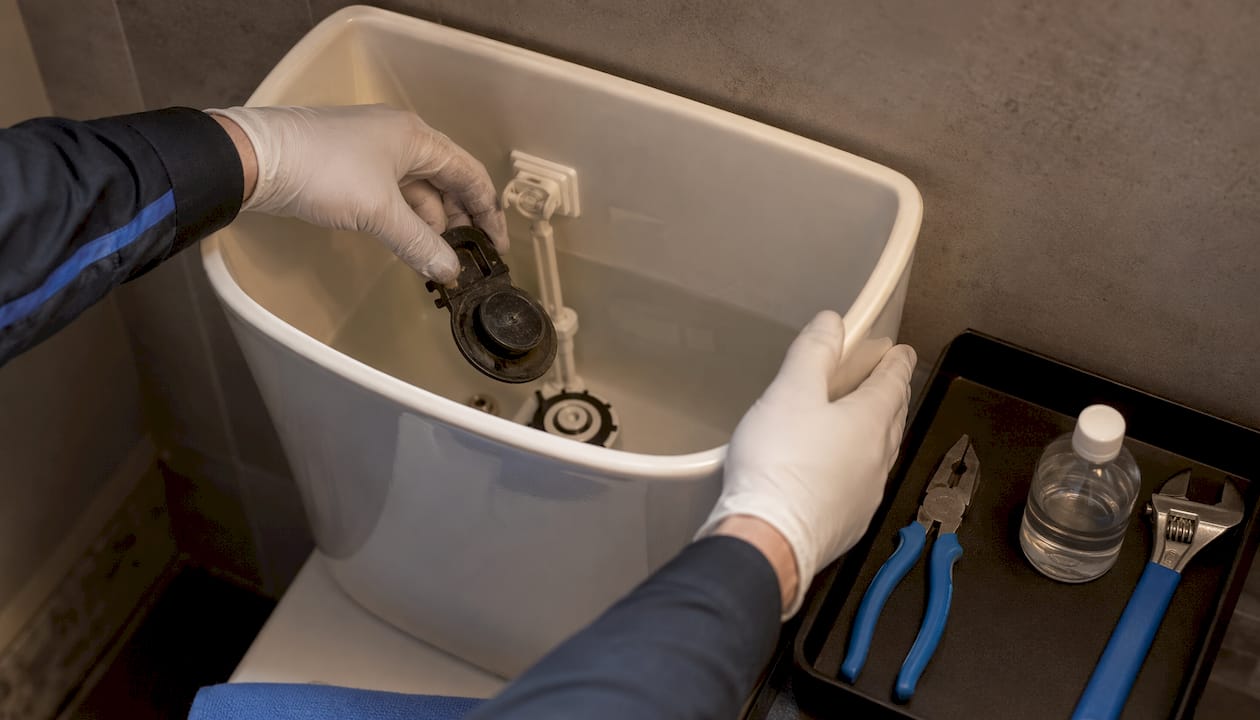
The flapper (or flush valve seal) sits at the very bottom of the cistern and covers the flush valve opening. When you press the flush button or lever, it lifts to release water into the bowl, then drops back down to seal the tank so it can refill. A worn flapper is the culprit behind what plumbers call “ghost flushing,” where the toilet seems to flush on its own at random intervals. That’s just water slowly leaking past a seal that no longer sits flat.
The fill valve is the tall cylindrical mechanism, usually on the left side of the cistern. Its job is to let fresh water in after a flush and shut off once the water reaches the correct level. Fill valves typically last around 7 years before internal seals and washers degrade enough to cause running or slow-fill problems. After this period, replacing the whole unit is more cost-effective than attempting to patch individual seals.
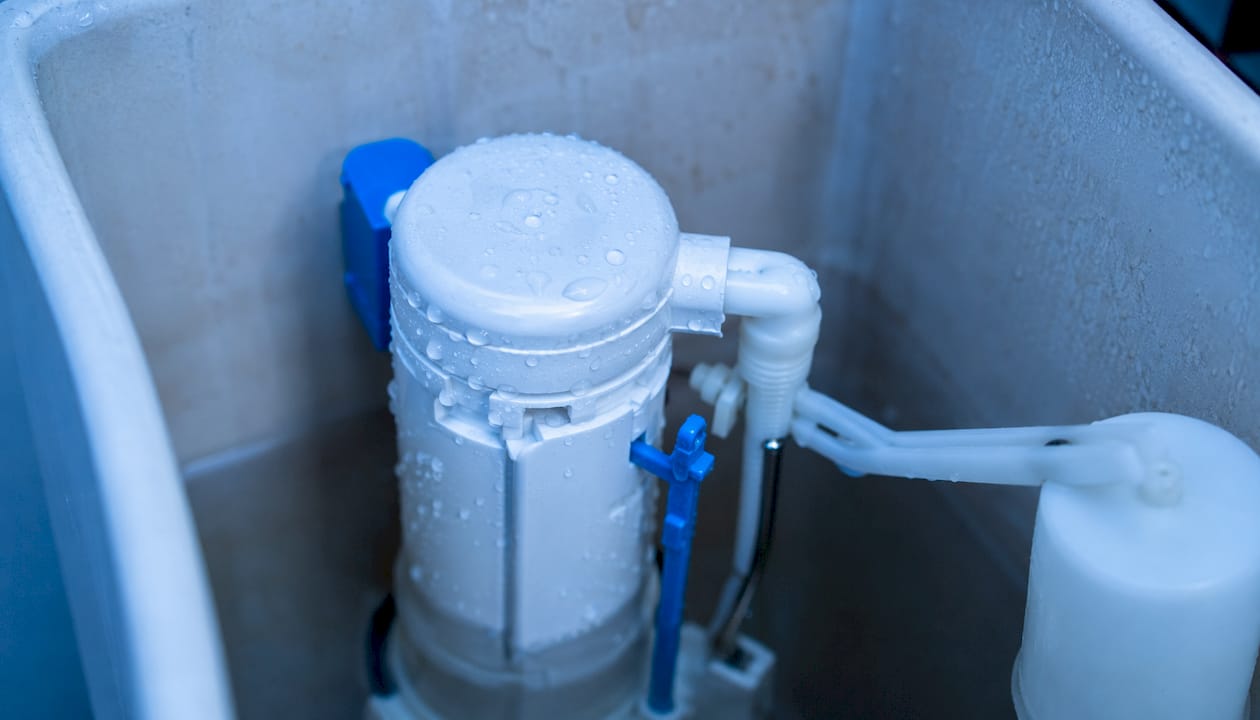
The float tells the fill valve when to stop. In older toilets, this is a ballcock: a hollow ball on a metal arm that rises with the water level. In modern UK toilets, it’s usually a float cup that slides up and down the fill valve shaft. Either way, if the float is set too high, water reaches the overflow tube before the valve shuts off.
The flush valve is the housing the flapper sits in. It’s less likely to fail than the flapper itself, but the seating surface can accumulate limescale, preventing a proper seal even with a brand-new flapper.
The isolation valve lives on the supply pipe outside the cistern. It controls whether water reaches the toilet at all. Isolation valves can partially seize from corrosion or mineral deposits, restricting flow even when they appear fully open. A rhythmic chattering noise during refilling often signals a deteriorated diaphragm washer inside the fill valve, which means replacement is coming soon.
| Component | Function | Common failure |
|---|---|---|
| Flapper | Seals cistern base after flush | Warping, mineral buildup, age |
| Fill valve | Admits water after flush, shuts off at target level | Clogged filter, worn diaphragm |
| Float | Signals fill valve to stop | Stuck position, waterlogged ball |
| Flush valve | Houses flapper, directs water to bowl | Limescale on seating surface |
| Isolation valve | Controls supply to cistern | Corrosion, partial seizure |
Pro Tip: A healthy cistern should refill within 2–3 minutes after flushing. If yours takes longer, or never seems to finish, the fill valve or isolation valve is restricting flow.
Tools and materials you’ll need before you start
Getting everything together before you open the cistern saves multiple trips to the kitchen and back.
Tools:
- Adjustable wrench or slip-joint pliers
- Flat-head and Phillips screwdrivers
- Old towels or rags
- A bucket (for residual water in the cistern)
- Rubber gloves
Replacement parts to have on hand:
- Universal flapper (check your toilet brand first; some require a specific size)
- Fill valve assembly (a modern diaphragm-type unit costs around £8–£20)
- Spare rubber washers and O-rings
- Replacement isolation valve (if yours is old or corroded)
Cleaning supplies:
- White vinegar or a proprietary descaler for limescale removal
- An old toothbrush for scrubbing valve seats and filter screens
Pro Tip: Before buying a replacement fill valve, photograph the existing unit and take the cistern model number to the hardware store. Not all valves are interchangeable, and returning the wrong part wastes time.
In hard water areas across much of the UK, limescale is the hidden cause behind many slow-fill and running toilet problems. White vinegar left to soak on a clogged filter screen for 20–30 minutes dissolves most deposits without damaging rubber seals.
Step-by-step fixes for each common cause
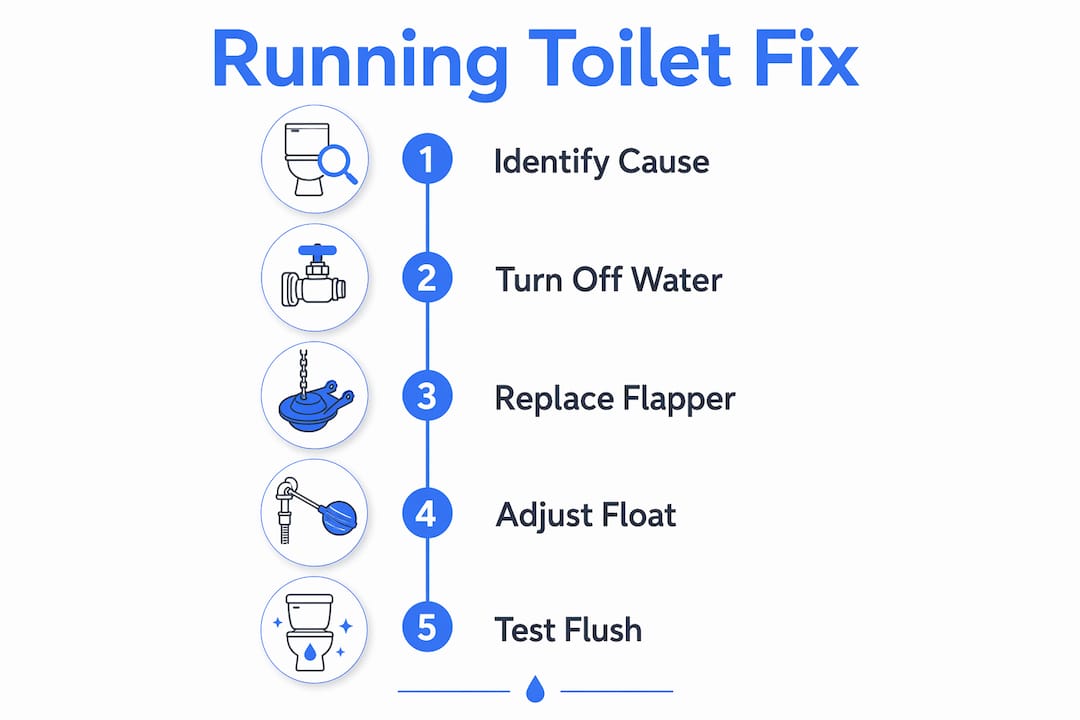
Work through these in order. Most running toilets are solved by step one or two.
-
Shut off the water supply. Turn the isolation valve clockwise until the slot sits across the pipe. Flush the toilet to empty the cistern. Lay towels around the base in case of drips.
-
Check the flapper first. Reach into the empty cistern and press down firmly on the flapper. If the hissing or running stops immediately, the flapper isn’t sealing. Unhook the chain from the flush lever, unclip the flapper from the flush valve pegs, and fit the replacement. Check that the trip lever chain has about 1–2 links of slack. Too tight and the flapper stays slightly open; too loose and it won’t lift fully on a flush.
-
Inspect the flush valve seat. If a new flapper still leaks, run your finger around the valve seat at the bottom of the cistern. Limescale or grit on that surface prevents a seal. Clean it with white vinegar and a cloth, then test again.
-
Clean the fill valve filter. Turn off the water, then unscrew the cap on top of the fill valve (usually a quarter-turn counterclockwise). Lift out the cap and check the small filter screen underneath. Sediment or debris lodged here prevents the valve from shutting off fully. Rinse the screen under a tap, reassemble, and restore the water supply.
-
Adjust the float. Turn the water back on and watch the fill level. The water should stop rising about 25mm below the top of the overflow tube. If it keeps climbing, lower the float. On a ballcock, gently bend the arm downward. On a modern float-cup valve, turn the adjustment screw on top of the fill valve clockwise to lower the cutoff point.
-
Replace the fill valve if cleaning doesn’t help. Shut off the water again, flush to empty, then disconnect the supply hose from the base of the cistern. Unscrew the locknut holding the fill valve in place, lift the old unit out, and fit the new one following the manufacturer’s instructions. Reconnect the supply hose, restore water, and check for leaks at the connection point.
-
Check the isolation valve itself. If the cistern fills very slowly even with a clean, functioning fill valve, the isolation valve may be partially closed or blocked. Turn it fully off, then fully on again. Sometimes this dislodges debris. If the screw head is rounded or the valve feels stiff, don’t force it. A seized isolation valve is a job for a plumber.
| Problem | Likely cause | DIY fix |
|---|---|---|
| Constant hissing | Worn flapper | Replace flapper, check chain slack |
| Slow fill | Clogged filter or partial isolation valve | Clean filter screen, open valve fully |
| Water above overflow | Float set too high | Adjust float arm or screw |
| Cistern won’t hold water | Flush valve seat fouled | Clean seat, replace flapper |
| Chattering noise when filling | Deteriorated diaphragm washer | Replace fill valve assembly |
How much water and money a running toilet actually wastes
The financial case for fixing a running toilet quickly is stronger than most people realize. A continuously running toilet wastes a large amount of water every month, and that waste shows up directly on your water bill. In the UK, where water metering is increasingly common, the cost accumulates fast.
Beyond the bill, there’s a broader environmental point. The UK Green Building Council notes that toilet flushing accounts for a significant share of household water use, making a leaking cistern one of the most wasteful fixtures in a home. Fixing a running toilet is one of the highest-impact, lowest-effort things a homeowner can do for both their wallet and local water resources.
If multiple taps in your home also have weak flow, the problem may be low mains water pressure rather than the toilet hardware itself. That’s a different fix entirely and usually requires a plumber to test static pressure at the supply point.
A running toilet is rarely just an annoyance. Left unrepaired, even a slow trickle from a worn flapper or a fill valve that won’t shut off can waste hundreds of liters of water per week. Early repairs are almost always cheaper than the cumulative water bill increase.
When to call Jmplumbingservicesltd for your running toilet
Most running toilet problems are genuinely DIY-friendly. But there are situations where pushing further without professional help makes things worse, not better.
Call a qualified plumber when:
- The isolation valve is seized and won’t turn, even after applying penetrating oil. Forcing a stuck valve can crack the fitting and cause a leak at the supply line.
- You’ve replaced the flapper and fill valve and the toilet is still running, which points to a problem with the pipework or a cracked cistern.
- Water is pooling at the base of the toilet, which suggests a seal failure below the pan rather than inside the cistern.
- The cistern itself is visibly cracked. Hairline cracks can’t be patched reliably; the unit needs replacement.
- The fill valve replacement feels beyond your comfort level, particularly if the pipework looks corroded or old.
Jmplumbingservicesltd covers Cardiff and the Vale of Glamorgan, handling everything from a seized isolation valve to a full cistern replacement. Their team brings the same attention to a single repair job as they do to a complete bathroom renovation, which matters when the fix involves older pipework or non-standard fittings.
When a toilet repair goes beyond a simple part swap, the risk of making it worse is real. Jmplumbingservicesltd’s local plumbers diagnose the actual cause quickly, use quality components, and leave no drips behind.
For persistent leaks or anything involving the pressurized supply line, getting a professional in early is almost always cheaper than dealing with water damage later. You can read more about managing bathroom leaks in Cardiff on the Jmplumbingservicesltd site.
Jmplumbingservicesltd: expert plumbing help across Cardiff and the Vale
When the DIY route has run its course and the toilet is still running, or when you’d simply rather have it done right the first time, Jmplumbingservicesltd is the local answer. Based in Cardiff and serving the Vale of Glamorgan, they handle plumbing repairs of every scale, from a stubborn fill valve to a full bathroom installation.
What sets them apart from a generic call-out service is the attention to the whole job. A plumber from Jmplumbingservicesltd won’t just swap the obvious part and leave. They’ll check the isolation valve, the supply line, the flush mechanism, and the surrounding pipework to make sure the fix actually holds. That’s the difference between a repair that lasts and one that has you calling again in three months.
Whether you need a plumber in Cardiff for an urgent repair or you’re thinking about a full bathroom renovation while the cistern is already open, Jmplumbingservicesltd offers both. Get in touch through their website to book a visit or get a quote for your specific situation.
Key Takeaways
A toilet that keeps running is almost always caused by a worn flapper, a failing fill valve, or a float set too high, and all three are fixable with basic tools and inexpensive parts.
| Point | Details |
|---|---|
| Most common cause | A worn or warped flapper is the leading reason a toilet runs constantly after flushing. |
| Fill valve lifespan | Fill valves generally last about 7 years before mechanical wear on internal rubber seals and washers leads to running toilet or slow-fill problems. |
| Refill benchmark | A healthy cistern should refill within 2–3 minutes after flushing; anything longer points to a supply or valve issue. |
| When to stop DIY | Seized isolation valves, cracked cisterns, or base leaks need a professional to avoid making the problem worse. |
| Jmplumbingservicesltd | Cardiff and Vale of Glamorgan homeowners can book expert plumbing repairs and full bathroom renovations through Jmplumbingservicesltd. |