
Wet Room Cost UK: A Realistic Homeowner's Guide
Discover the true wet room cost UK homeowners face, from budget options to premium finishes. Get expert tips to maximize your investment!

A fully fitted wet room in the UK typically costs in a moderate range according to industry cost data. Compact conversions start at a lower cost, and premium rooms with natural stone and designer fittings can be significantly more expensive. Checkatrade’s figures put the average closer to £8,000 for a standard installation.
Two things drive that range more than anything else:
- Tanking and drainage consume a substantial portion of the total project cost and cannot be cut without serious long-term risk.
- Subfloor type and drainage position determine whether your floor prep costs vary significantly depending on the circumstances.
VAT relief and the Disabled Facilities Grant can reduce out-of-pocket costs for eligible homeowners. Jmplumbingservicesltd covers installations across Cardiff and the Vale of Glamorgan and can advise on both.
Table of Contents
- What does a wet room cost in the UK across different budgets?
- Where does the money actually go? A component-level breakdown
- What pushes the price up, and where can you safely save?
- How long does a wet room installation take?
- What are the red flags in a cheap wet room quote?
- Can VAT relief or grants reduce your wet room cost?
- How do you choose the right contractor for a wet room?
- What does it cost to maintain a wet room after installation?
- Will a wet room affect your home insurance?
- Key Takeaways
- Why cheap wet rooms almost always cost more in the end
- Jmplumbingservicesltd: wet room installations across Cardiff and the Vale of Glamorgan
- Useful sources and further reading
What does a wet room cost in the UK across different budgets?
Three broad price bands cover most UK projects. Where you land depends on room size, subfloor condition, tile choice, and how much structural work the drainage position requires.
| Band | Typical Range | What’s Usually Included |
|---|---|---|
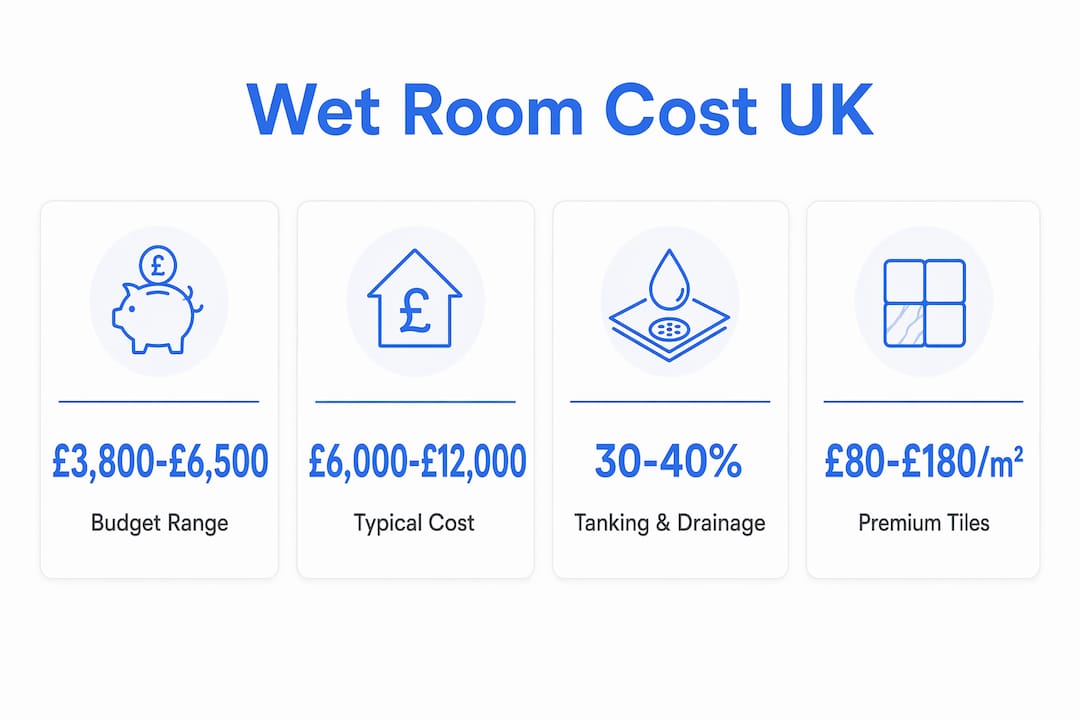
| Budget / compact (2–3 m²) | £3,800–£6,500 | Point drain, standard porcelain tiles, basic shower valve, tanking kit, labour |
| Mid-range / standard (5–7 m²) | £6,000–£12,000 | Linear drain, mid-grade porcelain, thermostatic valve, full tanking system, labour |
| Premium / luxury (7 m²+) | £15,000–£18,000+ | Natural stone, frameless glass screen, designer brassware, underfloor heating, bespoke drainage |
Budget band suits a small en-suite or cloakroom conversion. You get a functional, waterproofed room, but expect standard fittings and a point gully drain rather than a linear channel.
Mid-range is where most family bathrooms land. A worked example from a 6 m² regional job illustrates how costs stack up:
- Wet room tanking kit and membrane: ~£600
- Linear drain (supplied): ~£350
- Floor former and screed: ~£500
- Porcelain tiles and adhesive: ~£900
- Thermostatic shower valve and fittings: ~£700
- Labour (plumber, tiler, carpenter): ~£4,500
- Underfloor heating: ~£350
- Miscellaneous (grout, fixings, waste): ~£200
- Approximate total: ~£8,100–£12,390 depending on region and spec
Premium projects add natural stone tiles (£80–£180/m² supplied versus £50–£90/m² for porcelain), frameless glass screens, and designer brassware. Stone also increases labour costs by 10–20% because it requires specialist adhesives, sealing, and longer installation time.
Where does the money actually go? A component-level breakdown
Understanding the cost split helps you identify which line items are fixed and which have genuine flexibility.
| Component | Typical Cost Range | Share of Budget |
|---|---|---|
| Tanking membrane system | £15–£35/m² (materials) | ~15–20% |
| Drainage (linear or point) | £100–£600 supplied | ~10–15% |
| Floor former / screed / fall | £300–£2,000 | ~8–12% |
| Tiles and adhesive | £700–£2,500+ | ~12–18% |
| Sanitaryware and fittings | £500–£2,000 | ~10–15% |
| Labour (all trades) | £2,500–£6,000+ | 30–40% |
| Subfloor structural work | £300–£2,000 (if needed) | variable |
Labour is consistently the largest single cost, running from £2,500 upward. Regional day rates matter here: a plumber charges roughly £240–£360 per day outside London and £300–£440 in London; tilers run £220–£320 regionally and £280–£380 in London.
The invisible costs catch many homeowners off guard. Subfloor preparation, creating the correct fall toward the drain, and structural work to reposition waste pipework are often not visible in a headline quote. If the new drainage position doesn’t align with existing waste runs, lifting flooring or creating a dropped deck adds £300–£2,000 to the project.
Statistic: Tanking and drainage together represent a sizable portion of a typical wet room project budget — the portion that determines whether the room lasts many years or fails prematurely.
What pushes the price up, and where can you safely save?
Pro Tip: Saving on tanking quality or labour is a false economy. Remedial work after failed waterproofing typically costs £3,000–£8,000 because the room has to be stripped and rebuilt from scratch.
The biggest cost escalators are subfloor type (timber costs more to prepare than concrete), moving the drainage position, choosing natural stone over porcelain, adding underfloor heating, and complex strip-out work.
| Acceptable Cost Cut | Red-Flag Cut |
|---|---|
| Standard porcelain over natural stone | Skipping or thinning the tanking membrane |
| Off-the-shelf glass screen over bespoke | Using a standard shower tray drain instead of a wet-room-rated gully or linear drain |
| Keeping existing waste position where possible | No itemized quote for tanking and drainage |
| Mid-grade thermostatic valve over designer | Cash-only deal with no written warranty |
| Larger format tiles (fewer grout lines, less labour) | Omitting the correct floor fall toward the drain |
Safe savings come from design and material choices. Larger format tiles reduce the number of grout lines and cut tiling time. Keeping the drain in its existing position avoids structural work entirely. An off-the-shelf frameless screen costs a fraction of bespoke glass. None of these compromise waterproofing.
How long does a wet room installation take?
A typical mid-range wet room takes several working days on site, generally within a week or two, excluding lead times for bespoke items like custom glass or special-order tiles.
- Survey and quote (pre-start): Contractor assesses subfloor type, existing waste position, and drainage options. Structural issues flagged here, not mid-project.
- Strip-out and prep (days 1–2): Remove existing bathroom fittings, lift floor coverings, assess subfloor condition.
- Structural and floor work (days 2–3): Carpenter notches joists or builds a raised/lowered deck if drainage position changes; concrete subfloors are simpler and faster.
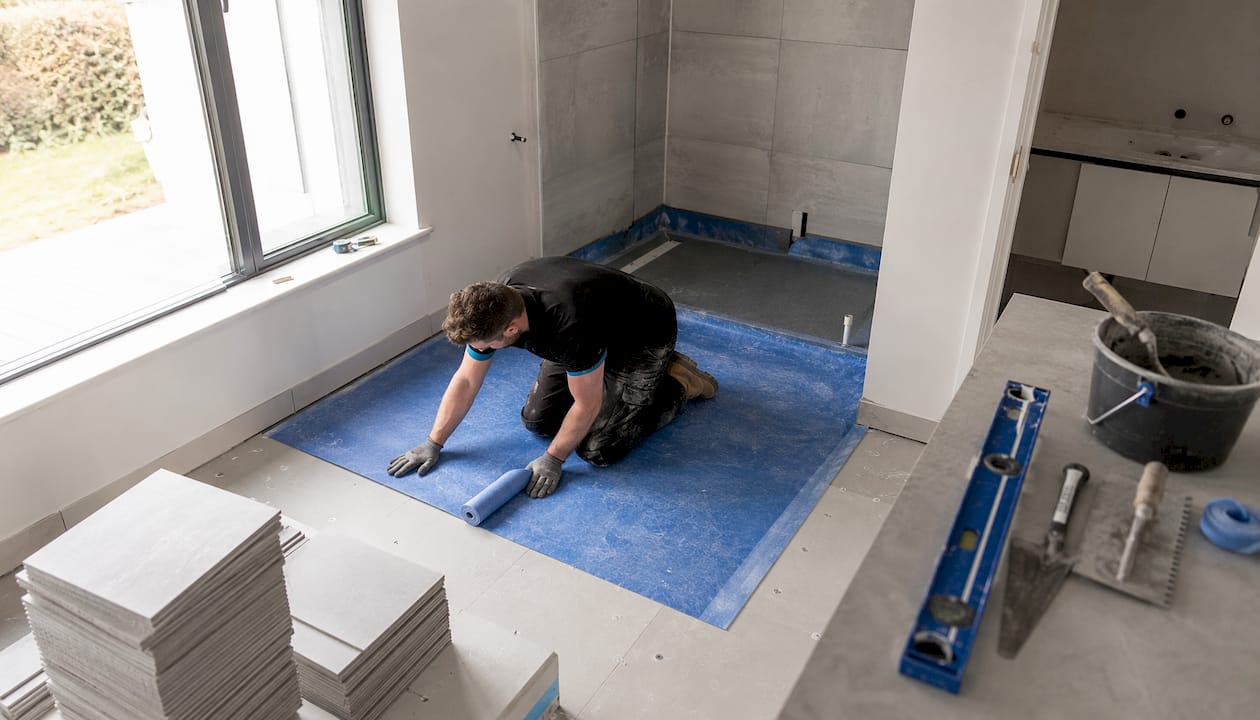
- Tanking (days 3–4): Plumber or specialist applies tanking membrane to floor and walls to the required height, following manufacturer specifications including drain flange detail.
- Drainage and first-fix plumbing (days 4–5): Wet-room-rated drain installed with manufacturer flange; waste pipework connected and tested.
- Tiling (days 5–7): Tiler works floor first (maintaining fall), then walls; natural stone adds a day or more.
- Second-fix plumbing and electrical (days 7–8): Shower valve, screen, sanitaryware fitted; electrician installs lighting, extractor fan, and any underfloor heating controls.
- Commissioning and snagging (days 9–10): Visual inspection, water test, grout check, extractor test. Any snagging items resolved before handover.
Before work starts, check whether a building notice is required with your local authority, particularly if structural work or electrical changes are involved.
What are the red flags in a cheap wet room quote?
Wet room installs priced significantly below local market averages almost always indicate shortcuts in tanking or drainage. Those shortcuts typically surface as leaks or major remedial bills within 5–10 years.
- No itemized breakdown for tanking and drainage (just a single “wet room installation” line)
- Vague or missing tanking specification (no membrane brand or system named)
- No mention of drain flange detail or manufacturer-specified installation method
- Labour quoted as a single lump sum with no day rates or trade breakdown
- No written warranty covering waterproofing and workmanship
- No proof of public liability insurance
- Cash-only payment with no contract
If you ever face a bathroom leak after a wet room installation, the cause is almost always one of the items above. Budget for periodic grout and sealant checks every 12–18 months, and keep the extractor fan maintained to prevent moisture buildup.
Can VAT relief or grants reduce your wet room cost?
Some wet room works qualify for VAT relief or grant funding, but eligibility depends on the purpose of the adaptation and the applicant’s circumstances.
- Disabled Facilities Grant (DFG): Available through your local authority for adaptations that help a disabled person live independently. Wet rooms installed for accessibility purposes are a common qualifying project. Contact your local council or an occupational therapist for a needs assessment.
- VAT relief: Certain adaptations for disabled people may qualify for zero or reduced VAT. Ask your contractor to provide an itemized quote that separates qualifying work from standard renovation work.
- Housing association and charity support: Some housing associations and charities offer additional funding or assistance for eligible residents.
To pursue funding: gather medical or occupational therapy evidence, request an itemized quote from your contractor (essential for grant applications), and check GOV.UK’s guidance on the Disabled Facilities Grant for current eligibility thresholds and application routes.
How do you choose the right contractor for a wet room?
Start by asking for itemized quotes. A contractor who cannot break down tanking, drainage, floor prep, tiling, and labour separately is either inexperienced or hiding something.
Questions to ask every contractor:
- Which tanking membrane system will you use, and what is the manufacturer’s name?
- What drain and flange specification are you installing?
- Who certifies the waterproofing, and is there a written warranty?
- What is your labour day rate and how many days do you estimate per trade?
- Do you carry public liability insurance, and can I see the certificate?
Quote template items to request in writing:
- Tanking membrane (brand, system, m² coverage)
- Drainage (product name, type, flange detail)
- Floor preparation and fall creation
- Tiling (supply and fix, separate labour rate)
- Labour by trade (plumber, tiler, carpenter, electrician)
- Warranty terms and duration
Jmplumbingservicesltd’s bathroom fitters in Cardiff provide written, itemized quotes with named products and clear warranty terms. This includes Cameron’s professional bio and credentials, first-hand case studies of bathroom renovations completed by JM Plumbing Services Ltd, and customer testimonials explicitly linked to Cameron or authored content.
What does it cost to maintain a wet room after installation?
Ongoing maintenance costs are modest compared to the installation, but they matter for long-term performance.
Grout and sealant checks every 12–18 months catch early signs of water ingress before they become structural problems. Re-grouting a wet room floor typically costs £150–£400 depending on size and tile format. Extractor fan servicing or replacement runs £80–£200. If a linear drain develops a blockage, professional drain unblocking costs vary by severity but is far cheaper than remedial tanking work.
Budget roughly £100–£300 per year for routine maintenance, and treat any discoloration around grout lines or sealant joints as an early warning sign worth investigating promptly.
Will a wet room affect your home insurance?
Installing a wet room is a significant structural change, and most home insurance policies require you to notify your insurer before or immediately after the work is completed.
Failure to notify can invalidate a claim if water damage occurs later. Some insurers may adjust your premium slightly, particularly if the wet room replaces a standard bathroom in a property with timber floors, where leak risk is higher. Others treat it as a neutral or positive change if the installation is professionally certified and waterproofed to a recognized standard.
Ask your contractor for a completion certificate or written warranty that confirms the tanking specification. This documentation is what your insurer will want to see. Always check your policy’s home improvement notification clause before work starts.
Key Takeaways
A properly installed wet room costs £6,000–£12,000 for most UK homeowners, with tanking and drainage accounting for 30–40% of that total and representing the one area where cutting costs creates serious long-term risk.
| Point | Details |
|---|---|
| Typical UK cost range | Most fitted wet rooms cost £6,000–£12,000; compact jobs (2–3 m²) start around £3,800–£6,500. |
| Tanking and drainage are non-negotiable | These consume 30–40% of the budget; skimping leads to remedial costs of £3,000–£8,000. |
| Safe savings exist | Choose standard porcelain over stone, keep existing waste position, and use off-the-shelf screens. |
| Get itemized quotes | Ask every contractor to name their tanking system, drain spec, and warranty terms in writing. |
| Jmplumbingservicesltd | Offers full wet room installations with itemized quotes and warranties across Cardiff and the Vale of Glamorgan. |
Why cheap wet rooms almost always cost more in the end
The conventional wisdom says “get three quotes and pick the middle one.” That is reasonable advice for painting a fence. For a wet room, it misses the point entirely.
The price difference between a £5,500 quote and an £8,500 quote for the same room is almost never about efficiency or a better deal on tiles. It is about what is not in the cheaper quote: a named tanking system, a wet-room-rated drain with the correct flange detail, and the labour time to create a proper fall across the floor. Those are not optional extras. They are the entire reason a wet room works.
The £3,000–£8,000 remedial cost for failed tanking is not a hypothetical. It is what happens when a room is stripped back to the subfloor and rebuilt because the original waterproofing was inadequate. The homeowner pays twice, and the second time costs more than the first would have.
Budget-friendly wet rooms are absolutely achievable. The savings are real when they come from choosing porcelain over stone, a standard screen over bespoke glass, or a mid-grade valve over a designer one. None of those choices touch the waterproofing. That is the line worth holding.
Jmplumbingservicesltd: wet room installations across Cardiff and the Vale of Glamorgan
Getting a wet room right the first time comes down to one thing: a contractor who treats tanking and drainage as the foundation of the job, not an afterthought. Jmplumbingservicesltd installs full wet rooms across Cardiff and the Vale of Glamorgan, with written itemized quotes that name the tanking system, drain specification, and warranty terms before a single tile is laid.

Every project starts with a survey to assess your subfloor, existing waste position, and drainage options. You get a clear timeline, a breakdown of costs by trade, and a warranty that covers waterproofing and workmanship. No vague lump sums, no cash-only deals.
For bathroom renovation in Cardiff or a wet room installation anywhere across the Vale of Glamorgan, contact Jmplumbingservicesltd to request your itemized quote and site survey.
Useful sources and further reading
- Average Wet Room Cost UK — BestBuilders: Primary UK cost ranges (£6,000–£12,000 fitted), subfloor cost escalations, and remedial cost data.
- Wet Room Installation Costs — squote.app: Detailed component breakdown including tanking membrane costs (£15–£35/m²), linear drain pricing (£180–£600), and regional labour day rates.
- Wet Room Installation Cost — Checkatrade: Independent industry average (~£8,000) and installer day rate benchmarks.
- Wet Room Installation Cost — Bromley Tiler: Tile material cost comparison (natural stone vs. porcelain) and labour uplift data.
- How Much Does a Wet Room Cost — MyBuilder: Accessible overview of core job costs including tanking kits, tiles, and shower fittings.
- Disabled Facilities Grant — GOV.UK: Official eligibility criteria, application process, and current grant thresholds for accessibility adaptations.
- Drainage services — Budget Rodz: Technical detail on drain maintenance and unblocking relevant to post-installation upkeep.