
7 Tradesperson Backed Steps to Fix a Blocked Bathroom Sink for UK Homes
Tradesperson-backed, UK-friendly sequence to unblock a bathroom sink. Seven safe steps from stopper clear to P-trap removal, with when to call a plumber.
7 Tradesperson Backed Steps to Fix a Blocked Bathroom Sink for UK Homes
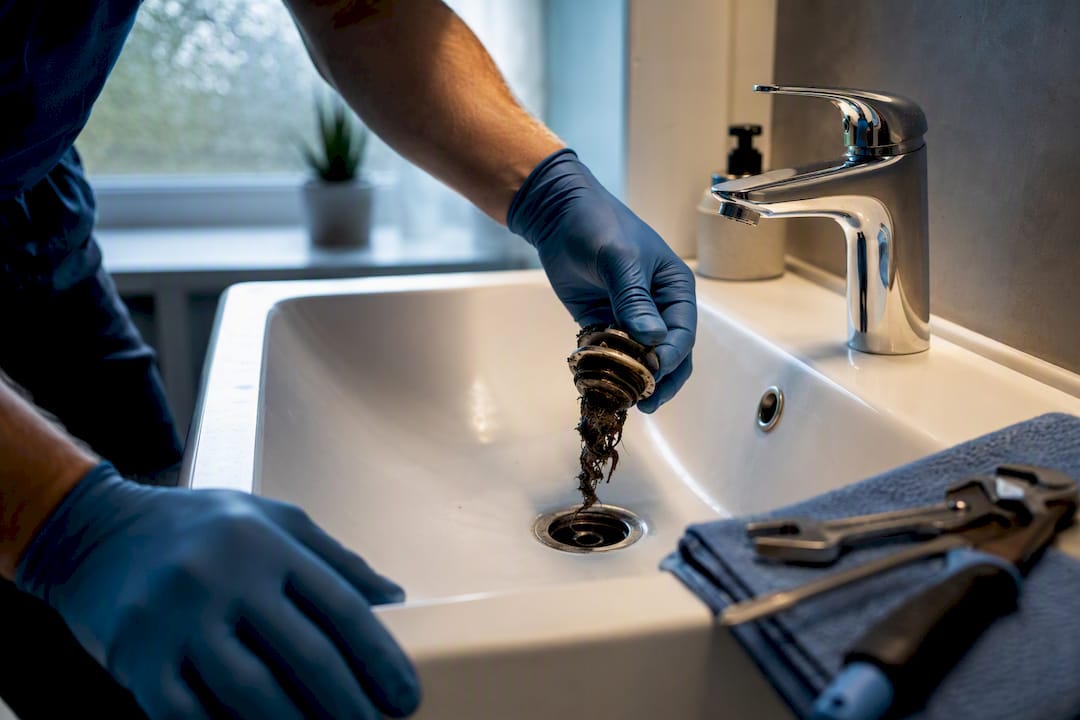
Most blocked bathroom sinks clear once you remove visible hair and gunk from the stopper and give the drain a few good plunges. That single move solves the majority of cases, since hair and soap scum are the usual culprits, and it rarely takes chemicals or a phone call. If water backs up in more than one fixture, gurgles, or smells like sewage, stop the DIY and get a plumber out.
TL;DR:
- Most bathroom sink clogs are caused by hair, soap scum, and toothpaste residue, which can often be cleared by removing the stopper and plunging.
- Using a Zip-It drain wand or a handheld drain snake can mechanically remove hair and debris without chemicals, avoiding pipe damage.
- Gurgling sounds typically indicate venting issues rather than a simple trap clog and often require professional inspection if they persist.
- Regular maintenance, such as monthly stopper cleaning and using mesh hair catchers, significantly reduces the likelihood of future blockages.
- DIY fixes are effective for minor hair clogs, but persistent or severe blockages, especially with multiple fixtures backing up, should be handled by a professional plumber.
Table of Contents
- What Causes a Blocked Sink in the Bathroom?
- Tools and Supplies to Have on Hand
- Step-by-Step: How to Unblock a Bathroom Sink
- Why Is My Sink Gurgling? Diagnosing Vent Problems
- When Should You Call a Plumber Instead of DIY?
- How to Stop Bathroom Sink Clogs Before They Start
- A Tradesperson’s Note on DIY Sink Fixes
- If You’d Rather Not DIY: How JM Plumbing Services Ltd Can Help
- Sources
- FAQ
What Causes a Blocked Sink in the Bathroom?
Bathroom sinks clog differently than kitchen sinks. There’s no grease, but there’s a steady diet of hair, soap scum, and toothpaste residue that combines into a paste that clings to pipe walls. Once that layer builds up, it grabs everything that flows past it, and the drain slows down long before it stops completely.
Most bathroom sink blockages trace back to hair mixing with soap scum and toothpaste residue, and clearing the stopper or trap usually solves it without any chemical help. But hair and soap aren’t the only offenders.
- Hair combined with soap scum and toothpaste sludge (the classic bathroom sink clog)
- Flushable wipes, cotton swabs, or sanitary products pushed too far down
- Small objects: bottle caps, jewelry, or toy parts that fall in and lodge in the trap
- Mineral buildup from hard water narrowing the pipe over time
- Poor pipe fall (not enough slope) that lets waste settle instead of draining away
A slow drain that gets progressively worse is a warning sign, not a nuisance to ignore. Catching a slow draining bathroom sink early, before it becomes a full stoppage, almost always means a five minute fix instead of a half hour one.
Tools and Supplies to Have on Hand
Keep a small kit under the sink so you’re not hunting for tools mid-job. You need less than you’d think.
- A cup plunger (not the flanged toilet type) sized to seal over the drain hole
- Rubber gloves and a bucket to catch trapped water and debris
- An old towel or rag to plug the overflow hole while plunging
- A Zip-It or flexible plastic drain wand for hooking hair clumps
- A bottle brush and an adjustable spanner for trap work
Metal snakes and pipe wrenches belong to plumbers for a reason. They can gouge plastic pipe or strip a slip nut if you’re not used to the feel of them. Skip the strong chemical drain cleaners as your opening move too. They’re a last resort, not a starting point, and they can sit in standing water eating away at seals while doing nothing for the actual clog.
Step-by-Step: How to Unblock a Bathroom Sink
Work through these in order. Most people never get past step two.
- Clear the stopper first. Lift or twist the pop-up stopper out (most rock back and release once you find the pivot rod under the sink) and pull off the hair and scum wrapped around it. This alone clears a shocking number of “blocked” sinks.
- Plunge it properly. Plug the overflow hole with a wet rag, add enough water to cover the plunger cup, and push straight down for 10 to 15 firm pumps before ripping it up on the last one to break the suction.
- Flush with hot tap water. Hot (not boiling) water melts soap scum loose. Boiling water can warp or crack PVC joints, so stick to what comes out of your hot tap.
- Try baking soda and vinegar, or an enzyme cleaner. Half a cup of baking soda followed by half a cup of vinegar creates a fizzing reaction that can loosen light residue; let it sit 15 minutes, then flush with hot water. Enzyme cleaners work slower but are gentler on pipes.
- Use a Zip-It or drain wand. Feed the barbed plastic strip down the drain, twist, and pull. A Zip-It style drain wand is cheap and shockingly effective at pulling out matted hair clumps sitting just below the stopper.
- Feed a handheld drain snake. If the wand doesn’t reach the clog, a flexible plastic auger goes further. Feed it slowly and stop the moment you feel resistance. Cranking through it can push the clog deeper instead of breaking it apart.
- Remove and clean the P-trap. Place a bucket under the U-shaped trap, loosen the slip nuts by hand or with a spanner, and let it drop. Most plastic P-traps come apart without tools, though metal traps often need a wrench and a careful hand on reassembly so you don’t overtighten and crack the nut. Check the trap and the horizontal pipe arm going into the wall for hair, jewelry, or debris, then reassemble and run water to test for leaks.
Pro Tip: Keep a Zip-It permanently stashed under every bathroom sink in the house. Running one through once a month takes thirty seconds and catches hair before it ever becomes a real clog.
Wear gloves through all of this, and if you’re mixing anything, never combine chemical products. Mixing bleach based cleaners with acidic ones creates dangerous fumes, and layering a chemical cleaner on top of standing water from a failed plunge attempt is asking for a mess when you finally break the seal loose.
Why Is My Sink Gurgling? Diagnosing Vent Problems
A gurgling sound while the water drains, or a bathroom sink gurgling when someone flushes the toilet down the hall, usually points away from the sink entirely. Your plumbing system relies on a vent stack to let air in behind draining water. Block that vent and the water creates a vacuum as it falls, sucking air back through the nearest trap and making that gurgling noise.
Run a simple test: flush the toilet and watch the sink. If it gurgles or the water level in the toilet bowl dips oddly, a blocked vent stack is a more likely cause than a straightforward trap clog.
- Flush the toilet and watch the sink and tub for bubbling or gurgling
- Run the washing machine or another fixture and note if drainage slows elsewhere too
- Check the roof vent pipe visually from the ground if you can, but skip climbing up yourself
- Consider an air admittance valve (AAV) as a fix if venting is the confirmed issue
Roof work is where DIY plumbing turns into a safety problem. Unsafe roof access is one of the more common reasons homeowners end up calling a plumber rather than finishing the diagnosis themselves, and there’s no shame in that math. If gurgling persists after you’ve confirmed the trap is clear, or it happens across multiple fixtures at once, that’s a vent or main-line issue that sits outside typical DIY territory.
When Should You Call a Plumber Instead of DIY?
Some signs mean stop right there and pick up the phone.
- Water backs up in more than one fixture (sink, tub, and toilet all struggling at once)
- Gurgling continues after you’ve cleaned the P-trap and confirmed it’s clear
- You smell sewage, notice slow drains throughout the house, or a blocked main line is a real possibility
- You find a leak at the trap joints after reassembly, or the trap won’t seal properly
- Rodent activity near drains, which is its own separate problem worth checking before it compounds a blockage
Pushing a drain snake too hard can jam a clog further into the pipe or crack an aging joint, turning a simple job into a repair. Before you call, take a couple of photos of the trap and pipe run, note what you’ve already tried, and mention whether the gurgling happens at other fixtures too. That handful of details usually cuts a diagnostic visit down by half.
How to Stop Bathroom Sink Clogs Before They Start
A little routine maintenance beats every emergency fix on this list combined.
- Monthly: pull the stopper, clear off the hair and scum, and give it a quick wipe before it goes back in
- Weekly: run hot water down the drain for thirty seconds after brushing your teeth or shaving
- Ongoing: fit a cheap mesh hair catcher over the drain and keep a small bin nearby for wipes and sanitary products instead of flushing them
- Every six months: do a full stopper clean, since routine stopper cleaning at that interval prevents hair and biofilm from building back up
- Quarterly: run an enzyme drain treatment through as a preventive flush
Pro Tip: A ten-cent mesh hair catcher does more to prevent a blocked sink bathroom problem than any cleaner on the shelf. It’s the cheapest plumbing insurance you’ll ever buy.
A Tradesperson’s Note on DIY Sink Fixes
The fixes that actually work are almost always mechanical, not chemical. Stopper cleaning, plunging, and a Zip-It handle the vast majority of the callouts we’d otherwise get for a “blocked” bathroom sink. Where homeowners go wrong is reaching for a chemical cleaner too early or forcing a snake past resistance instead of backing off. When gurgling shows up alongside a slow sink, that’s usually the moment to stop guessing and get a second opinion.
— James
If You’d Rather Not DIY: How JM Plumbing Services Ltd Can Help
Professional plumbing services provide a practical alternative to hours of trial and error under the sink. When a trap is corroded shut, a vent stack needs checking, or the same sink clogs again soon after you cleared it, experienced teams can handle trap clearance, vent inspection, and full bathroom plumbing repairs without you having to buy specialist tools for a job you’ll do once.
DIY makes sense for hair clogs and simple traps. It stops making sense once a clog is genuinely inaccessible, the trap is metal and seized, or the problem keeps coming back despite a clean trap and a clear vent test, because at that point you’re likely looking at a deeper drainage or venting fault. Services are offered for a range of issues, from a stubborn bathroom drain to a full renovation. If your sink keeps backing up no matter what you try, get in touch through our Cardiff bathroom installation page and we’ll get someone out to look at it properly.
Sources
This guide draws on maintenance advice from Which?, venting diagnostics from This Old House, and drain flow tips from Roto-Rooter. For trap types, see our guide on basin trap options.
- Which? — Best drain unblockers and maintenance advice
- This Old House — How to diagnose a gurgling sink
- Roto-Rooter — How to improve your sink’s flow
- FixItSimple — How to unblock a bathroom sink without chemicals first
FAQ
What Is the Best Way to Unblock a Bathroom Sink?
Start by removing the stopper and clearing hair and scum by hand, then plunge with the overflow hole sealed. That combination clears most bathroom sink clogs without any chemicals or tools beyond a plunger.
What Can I Pour Down the Bathroom Sink to Unclog It?
Hot tap water followed by a baking soda and vinegar mix is the safest first try, since boiling water and harsh chemicals can damage PVC pipes and seals. Enzyme drain cleaners are a gentler follow-up if the fizzing method doesn’t fully clear it.
Can Dish Soap Unblock a Sink?
A squirt of dish soap followed by hot water can help break down light soap scum and grease film, but it won’t shift a solid hair clog on its own. Pair it with plunging or a drain wand for anything beyond a minor slowdown.
What Is a Plumber’s Trick for Unclogging a Sink?
Pros reach for a Zip-It or drain wand before anything else, since it pulls hair clumps out mechanically without touching the pipe with chemicals. If that fails, removing the P-trap directly and checking the horizontal pipe run behind it catches clogs that sit just out of reach.
When Does a Blocked Sink Mean a Bigger Plumbing Problem?
If more than one fixture backs up at once, gurgling continues after you’ve cleaned the trap, or you notice sewage smells, the issue is likely in the main line or vent stack and needs a professional.