
UK Homeowners: 10 Minute Triage Before Calling a Blocked Toilet Plumber
UK homeowners: 10 minute DIY triage to fix most blocked toilets, spot emergency signs that need a plumber, and expect a typical callout cost of £120.
UK Homeowners: 10 Minute Triage Before Calling a Blocked Toilet Plumber
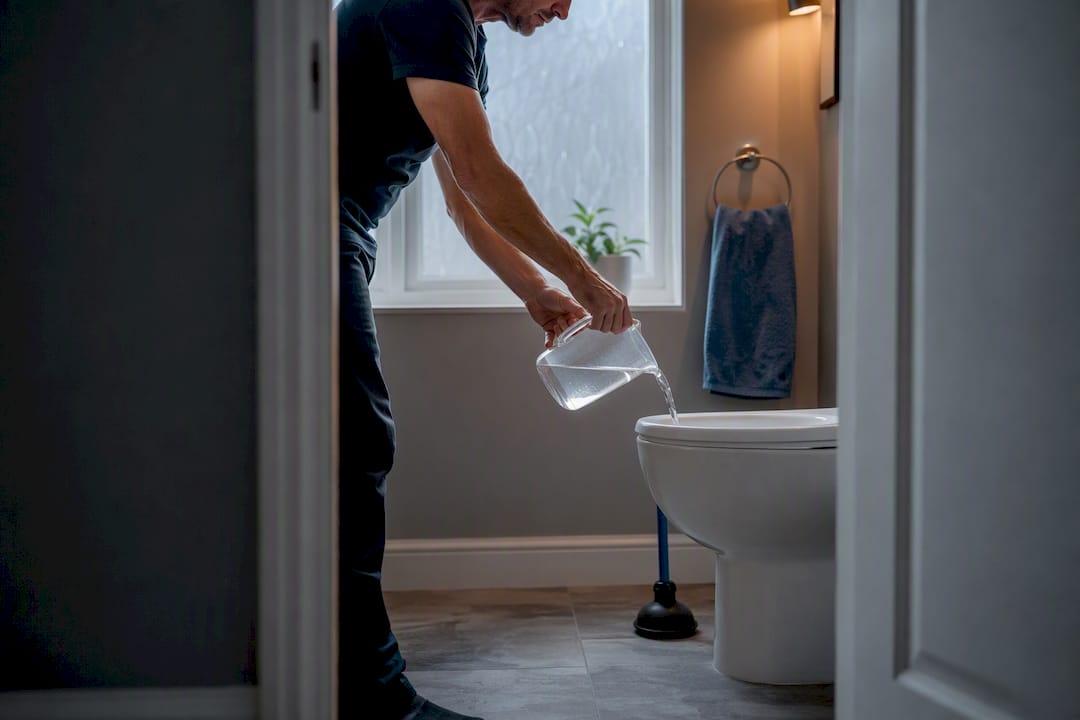
If the toilet is overflowing or leaking onto the floor, stop trying to fix it yourself and shut off the water at the valve behind the pan. Everything else can wait a few minutes. If it’s just draining slowly or filling without spilling, a plunger and warm soapy water clear the problem in most cases within 15 minutes. When that fails, a plumber typically arrives soon, clears it efficiently, and charges a fair price for a standard job.
TL;DR:
- Most household toilet blockages can be cleared within 15 minutes using a flange plunger and warm soap water, avoiding chemicals and wires.
- Stop troubleshooting if the toilet overflows, sewage smells, or multiple fixtures back up, and call an emergency plumber immediately.
- A professional plumber will use tools like an auger, jetting, or CCTV surveys to diagnose and fix deeper pipe or root issues, preventing recurring problems.
- Expect typical unblocking costs around £120 in the UK, with additional charges for CCTV, jetting, repairs, or out-of-hours service.
- Prevent future blockages by avoiding flushing wet wipes, sanitary products, and excess paper, especially in older or shared plumbing systems.
Table of Contents
- Quick DIY Triage: What to Try Before You Call a Plumber
- When Should You Call an Emergency Toilet Plumber?
- What Does a Plumber Actually Do to Fix a Blocked Toilet?
- How Much Does It Cost to Unblock a Toilet?
- What Actually Causes Most Toilet Blockages?
- How Do Plumbers Diagnose Deeper Drain Problems?
- How Can You Prevent Future Blockages?
- How JM Plumbing Services Ltd Handles Blocked Toilet Callouts
- The Real Problem Isn’t the Blockage, It’s the Guesswork
- Need a Blocked Toilet Sorted Today? Here’s What We’ll Do
- Sources
- FAQ
Quick DIY Triage: What to Try Before You Call a Plumber
Most blocked toilets aren’t emergencies yet, they’re just annoying. Before you pick up the phone, run through this sequence. It takes ten minutes and solves the majority of pan-level clogs.
- Stop the water first. If the bowl is close to the rim, turn off the isolation valve behind or beside the toilet, or close the stopcock if you can’t find it. This buys you time without a flood on the tile.
- Use a flange plunger, not a sink plunger. The extended rubber flap creates a proper seal in the toilet’s curved outlet. Push down gently to start (so you don’t splash), then plunge firmly 10 to 15 times.
- Try warm water and dish soap if the plunger doesn’t fully clear it. Pour a generous squirt of washing-up liquid into the bowl, follow with a bucket of warm (not boiling) water, and let it sit 20 minutes before flushing again. This is one of the most reliable homeowner methods for softening paper and waste.
- Skip the wire hanger and the chemical drain cleaner. A hanger can scratch the porcelain or gouge the seal around the trap, and repeated chemical cleaners degrade rubber washers and gaskets over time, not to mention the fumes if you mix products by accident.
- Test flush carefully. Pour a small amount of water in first rather than flushing at full pressure. If it drains at normal speed, you’re done. If it rises even slightly, stop.
Pro Tip: Wear rubber gloves and lay old towels around the base before you start. Toilet water splashback carries bacteria, and cleanup is far easier when you’ve contained the mess in advance.
If two rounds of plunging and soaking don’t shift it, stop. Repeated attempts on a stubborn blockage risk pushing waste further into the pipe or cracking an older pan.
When Should You Call an Emergency Toilet Plumber?
Some signs mean you stop troubleshooting and pick up the phone immediately.
- The toilet is overflowing or won’t stop rising after a flush. That’s a flood risk, not a delay-and-see situation.
- You smell sewage anywhere near the bathroom, hallway, or garden. That usually points to a blockage further down the soil stack, not just the pan.
- More than one fixture is affected. If the bath or sink gurgles or backs up when you flush, the problem sits deeper in the shared drain, and DIY tools won’t reach it.
- It’s the only toilet in the property and it’s out of action. Even a moderate blockage becomes urgent when there’s no backup.
- You’ve tried plunging and soaking twice with no improvement. At that point you’re not solving it, you’re delaying the call.
Recurring partial blockages, where the toilet drains but slower than usual over several weeks, aren’t a same-hour emergency, but they’re worth booking a visit for before they become one.
When you call, have a few details ready: how long the blockage has been happening, whether water is rising or just draining slowly, what type of property you’re in (house, flat, shared drain), and whether there’s clear access to the toilet and any external drain covers. Firms offering 24/7 emergency callouts commonly quote arrival within the hour for genuine emergencies, and giving accurate details up front helps the plumber bring the right equipment on the first visit instead of a second trip.
What Does a Plumber Actually Do to Fix a Blocked Toilet?
A plumber for clogged toilet jobs doesn’t just plunge harder than you did. There’s a structured process behind it, and knowing the steps helps you judge whether the person in your bathroom actually knows what they’re doing.
On arrival, a competent engineer will:
- Isolate the water supply first if there’s any overflow risk, same as the advice above, just with more experience judging how close to the edge things are.
- Run a visual check and a test flush to see exactly where and how badly the water is draining before touching any tools.
- Use a toilet auger (sometimes called a toilet snake) for blockages sitting in the pan or trap. It’s a flexible cable with a curved head that reaches past the bend without scratching porcelain.
- Switch to hand rodding or mechanical cutters if the auger doesn’t clear it, which usually means the obstruction has moved past the trap into the branch pipe.
- Bring in high-pressure jetting for anything further down the line, particularly grease, wipe buildup, or compacted paper that’s hardened over time.
- Run a CCTV drain survey if the blockage keeps recurring or doesn’t respond to jetting, since that’s the only reliable way to see what’s actually happening inside a pipe you can’t access visually.
The distinction between a pan-level blockage and a soil-stack problem matters more than most homeowners realize. A clog sitting right in the trap clears in minutes with an auger. One further down, especially in a shared stack serving multiple flats, needs jetting or a camera to even locate. Professional firms that confirm fixed pricing before starting work also tend to run a downstream flow check after the fix, not just a single test flush, and flag any follow-up recommendations if they spot early signs of wear in the pipework. That final check is what separates a temporary fix from one that actually holds.
How Much Does It Cost to Unblock a Toilet?
Expect to pay around £120 for a standard domestic toilet unblocking job in the UK, with most straightforward callouts wrapped up in 30 to 60 minutes.
That figure covers a typical pan-level or branch-pipe blockage cleared with an auger or hand rod. It climbs when the job needs more than a quick clear.
- Fixed-price quotes should be confirmed before anyone touches a tool. A trustworthy plumber tells you the price on the phone or on arrival, not after the job is half done.
- No call-out fee for domestic jobs is increasingly standard. You pay for the work, not for the van showing up.
- CCTV surveys, jetting, and pipe repairs cost extra, because they involve different equipment and, often, more time on-site.
- Out-of-hours or emergency callouts (nights, weekends, bank holidays) usually carry a premium over daytime rates, though a genuine flood risk is worth paying for.
- Parts replacement, such as a cracked pan or a failed wax seal underneath it, adds to the bill separately from the unblocking labor itself.
Before work starts, ask exactly what the quoted price includes, whether there’s a call-out charge if the job turns out to be quick, and what triggers an additional cost. If your budget is tight, our guide to plumber call-out costs breaks down what’s typical across different job types, so you know what a fair quote looks like before someone’s already on your doorstep.
What Actually Causes Most Toilet Blockages?
The pan itself is rarely the problem. What goes into it usually is.
- Excess toilet paper used in one flush, especially in older low-flow toilets that weren’t designed for it.
- Wet wipes, including ones labeled “flushable.” These don’t break down in water the way toilet paper does, and they’re a leading cause of repeat blockages across UK sewer systems.
- Sanitary products that swell on contact with water and lodge in the trap or branch pipe.
- Foreign objects, from cotton buds to small toys, especially in households with kids.
Beyond what gets flushed, some blockages come down to the plumbing system itself. Older toilets sometimes have a shallower trap design that clogs more easily. Long lateral pipe runs between the toilet and the main stack give waste more distance to snag on. Shared soil stacks in flats mean a blockage several floors down can back up into your bathroom even though you did nothing wrong. Tree roots and collapsed sections of underground pipe cause recurring blockages that no amount of plunging will fix.
If the same toilet clogs every few weeks despite careful use, that’s usually a sign of one of these structural issues rather than bad luck, and it’s worth a CCTV survey rather than another round of plunging.
How Do Plumbers Diagnose Deeper Drain Problems?
A CCTV drain survey is the tool that separates guesswork from an actual diagnosis. A small waterproof camera on a flexible rod travels down the pipe and streams live footage, letting the engineer see root ingress, an offset joint, or a collapsed section that no amount of rodding would reveal from the surface.
Firms recommend one when blockages keep recurring despite repeated clearance, because clearing the same spot over and over without knowing why wastes money on callouts that never fix the underlying cause.
There’s a real difference between clearing a blockage and repairing what caused it:
- Temporary clearance (rodding, jetting) removes the obstruction but leaves the pipe itself untouched. Fine for a one-off wipe blockage, not enough for a cracked pipe.
- Repair work (patching a section, excavating and replacing pipe, or relining without digging) fixes the structural cause, but takes longer, usually a half-day to a full day depending on access, and costs considerably more than a standard unblock.
The sensible workflow most reputable engineers follow is straightforward: clear the immediate blockage first, run a test flush, and only escalate to CCTV and repair if symptoms come back. Jumping straight to excavation on the first visit is rarely justified, and jumping straight to “just jet it again” on the fifth visit rarely solves anything either.
If the survey does turn up root ingress or a collapsed joint, get a written scope of the repair and a firm timeline before agreeing to the work. Diagnostic-led repairs cost more upfront but save you from paying for the same clearance every few months.
How Can You Prevent Future Blockages?
A few habit changes save you the cost of a callout altogether.
- Never flush wet wipes, even ones marketed as flushable, along with sanitary products, nappies, or cotton pads. Bin them instead.
- Use less paper per flush in older, low-flow toilets, or flush twice for a heavy load rather than forcing it through in one go.
- Book a preventative professional clean every year or two if you’re in an older property with narrow or long pipe runs, particularly if you’ve had two or more blockages already.
- In flats and shared buildings, report recurring smells or slow drains to the building manager quickly. A shared stack problem affects every flat on that line, not just yours.
Pro Tip: *Keep a small bin with a lid next to the toilet.
How JM Plumbing Services Ltd Handles Blocked Toilet Callouts
Some plumbing services handle blocked toilets, bathroom plumbing repairs, and full renovations in local areas, making jobs like a jammed pan or a cracked wax seal routine work, not a guessing game. On a callout, expect a clear diagnostic check, a straightforward quote before anything starts, and a tidy finish once the job’s done. If you’d rather see the full range of services first, our Cardiff plumbing page covers what a typical visit involves.
The Real Problem Isn’t the Blockage, It’s the Guesswork
Most advice on blocked toilets treats every clog the same, plunge harder, try again, call someone eventually. That’s backwards. The plunger and warm water combination genuinely works for the majority of pan-level blockages, and homeowners who skip straight to calling a plumber for a simple clog are often paying for something they could have cleared in ten minutes.
The mistake runs the other way just as often: people plunge the same toilet for the fourth time in two months and call that persistence instead of a warning sign. If a blockage recurs, the problem usually isn’t your flushing habits, it’s a shallow trap, a long pipe run, or root damage that no amount of plunging fixes. That’s where a CCTV survey earns its cost, not as an upsell, but as the only way to stop paying for the same callout repeatedly.
Prioritize the free, fast triage first. Respect the signs that say stop. And when a blockage keeps coming back, ask for a camera down the pipe before you ask for another plunger.
— James
Need a Blocked Toilet Sorted Today? Here’s What We’ll Do
Skip the plunger-and-hope routine if your toilet’s already backed up or you’ve tried twice with no luck. JM Plumbing Services Ltd clears blocked toilets, diagnoses recurring drain issues, and handles the bathroom repairs that often follow, whether that’s a cracked pan, a failed seal, or older pipework that needs more than a quick rod, including expert advice on choosing paint for bathrooms as part of bathroom renovation follow-ups.
Call or message us with a quick description of the problem (overflowing, slow draining, recurring) and how long it’s been happening. That’s usually enough for us to give you a straight answer on timing and price before we’re even at your door. If you’re in Cardiff or the Vale of Glamorgan and want to see the full range of plumbing and bathroom services we cover, visit our main Cardiff services page to book a visit or request a quote.
Sources
- Cost of Unblocking a Toilet
- How to unblock a toilet
- Nearly a quarter of people in the UK flush wet wipes down the toilet — here’s why they shouldn’t
- Toilet Unblock Service | Unblocking Toilets | Drain Doctor
FAQ
How Much Does a Plumber Cost for a Blocked Toilet?
A standard toilet unblocking job in the UK costs around £120 and typically takes 30 to 60 minutes. Costs rise if the job needs CCTV, jetting, or parts replacement.
Do Plumbers Fix Blocked Toilets?
Yes, clearing blocked toilets is routine work for most plumbers, using tools ranging from a toilet auger to high-pressure jetting depending on how deep the blockage sits. Local plumbing services offer these jobs alongside broader bathroom plumbing repairs in their service areas.
Why Does My Toilet Fill Up and Slowly Drain When I Flush?
This usually means a partial blockage is restricting flow rather than stopping it completely, often from a buildup of paper or a wipe caught in the trap. Try plunging and warm soapy water first, and call a plumber if it happens repeatedly.
How Do You Unblock a Badly Blocked Toilet Fast?
Start with a flange plunger and firm, steady pushes, then follow with warm water and dish soap if it doesn’t clear. If two attempts fail or the bowl is close to overflowing, stop and call an emergency toilet plumber rather than risking a flood.