
Replace a Toilet After Two Service Calls, UK Homeowners
Decide whether to repair or replace a toilet in the UK. Learn exact signals, from two service calls and cracks to persistent leaks, plus expected timing...
Replace a Toilet After Two Service Calls, UK Homeowners
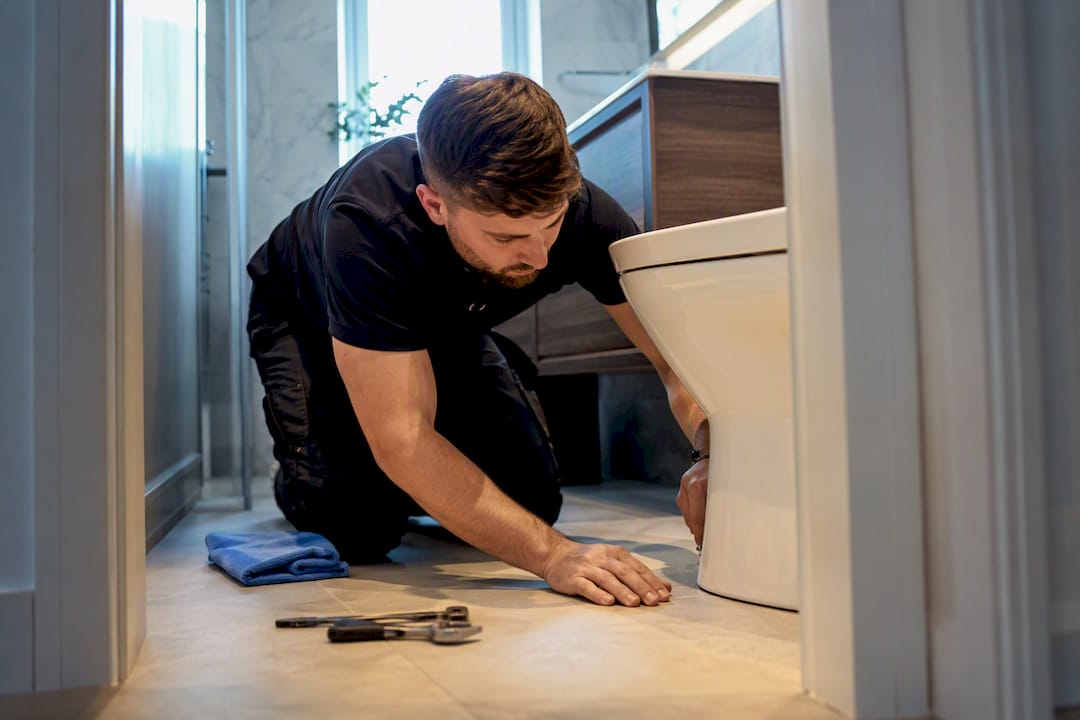
Replace your toilet once it’s past 20 years old and showing repeated problems, or sooner if the porcelain is cracked or the base leaks. Simple parts like a flapper, fill valve, or wax ring are usually worth fixing on a younger unit. Anything older with multiple failures stacked together belongs on the checklist below, not on another repair bill.
TL;DR:
- Most internal toilet parts such as flappers and fill valves wear out within four to seven years, requiring replacement to prevent leaks and clogs.
- Cracks in the porcelain bowl or tank are immediate reasons for replacement, especially if water leaks or structural damage are evident.
- Frequent repairs within a year or difficulty sourcing replacement parts indicate that replacement may be more economical than ongoing fixes.
- A toilet’s base wobble that persists after tightening bolts suggests subfloor or flange damage, which can worsen and warrants replacement.
- Replacing a toilet during a bathroom renovation or with a newer, water-efficient model can significantly enhance both functionality and property value.
Table of Contents
- How Long Do Toilets Usually Last?
- Signs Your Toilet Needs Replacing: A Ranked Checklist
- Repair vs. Replace: A Practical Decision Checklist
- Costs, Timing, and What to Expect During Installation
- How to Choose a Replacement Toilet
- What Inspections Reveal: Notes From the Field
- Does a New Toilet Add Value to Your Bathroom?
- Author Perspective: Timing Replacement With Renovations for Best Value
- How Jmplumbingservicesltd Handles Toilet Replacement
- Sources
- FAQ
How Long Do Toilets Usually Last?
A toilet’s porcelain bowl can hold up for decades, sometimes 20 to 50 years, but that number is misleading if you’re judging your fixture by the pan alone. The internal mechanics wear out far sooner. Flappers dry out and warp within a few years. Fill valves stick or leak silently. Wax ring seals under the base degrade and eventually let water seep into the subfloor.
That split matters for a repair decision: porcelain is permanent, the guts are not.
- Flappers and fill valves: typically last 4 to 7 years, cheap and easy to swap
- Wax rings and seals: often good for 10 to 20 years, but fail faster with heavy use
- The porcelain pan and cistern: can outlast the house, unless cracked or hit by hard water damage
Hard water speeds up mineral buildup inside the tank and bowl, which strains flush valves and stains porcelain permanently. Heavy household use, a poor original installation, or an unlevel floor all shorten the realistic lifespan of even a well-made toilet.
Signs Your Toilet Needs Replacing: A Ranked Checklist
Not every wobble or drip means you need a new toilet. But some signs are close to non negotiable. Here’s how to read them, ranked from most to least urgent.
- A cracked pan or cistern. Hairline cracks in porcelain don’t heal, and they don’t stay hairline. Water finds the weak spot and eventually leaks at the base or through the tank wall. Replace immediately, before it damages your subfloor.
- Persistent leaks after parts have been serviced. If a plumber has already replaced the wax ring, tightened the tank bolts, and the base is still wet, the leak is coming from somewhere the parts can’t fix, usually a warped flange or a hairline crack. Trade guidance is blunt about this: rocking or leaking toilets risk hidden water damage and sewer gas entering the room. Replace it.
- Repeated clogs or double-flushing, even with clear drains. If your drains test clear but the bowl still needs two flushes to clear waste, the trapway inside the toilet itself is likely undersized or fouled by mineral scale. That’s a design problem, not a plumbing problem.
- Parts becoming hard to find, or repairs stacking up within a year. Older or discontinued models sometimes use fittings that plumbing suppliers no longer stock. Recurring repairs within a 12-month window usually cost more over time than one clean replacement.
- A wobbling or unstable toilet. Often it’s just loose floor bolts, an easy fix. But if tightening them doesn’t stop the movement, the flange or subfloor underneath may be damaged, and continued rocking will make that worse.
- Poor flush performance on an older single-flush model. If you’re flushing twice out of habit rather than necessity, you’re paying for it every month on your water bill.
- Heavy staining or mineral buildup that scrubbing won’t remove. This is more a hygiene and resale issue than a functional one, but it’s a legitimate reason to upgrade.
- The tie-breaker: 20-plus years old, plus anything above. Age alone isn’t a reason to replace a toilet that’s working fine. Age combined with any of these signs usually is.
Pro Tip: Keep a simple log of every toilet repair and its date. Two service calls in a year for the same fixture is your clearest signal that repair has stopped being the cheaper option.
Repair vs. Replace: A Practical Decision Checklist
Most homeowners overcomplicate this call. It usually comes down to three questions: how old is the unit, how many things are wrong at once, and can you still get parts for it.
Repair usually makes sense when:
- The toilet is under 10 years old
- Only one component has failed (a flapper, fill valve, or single seal)
- Replacement parts are cheap and easy to find at any hardware store
- There’s no visible cracking or staining on the porcelain itself
Replacement usually makes more sense when:
- Multiple parts have failed within the same 12-month stretch
- The porcelain pan or cistern shows any crack, even a small one
- You’ve called a plumber for the same toilet more than twice this year
- You’re chasing efficiency gains that an old single-flush model can’t deliver
A rough way to judge the numbers: if two service calls for a single toilet already cost close to half of what a new mid-range unit and installation would run, replacement is typically the more economical long-term choice. Bring that math with you when a plumber visits. Ask directly whether the fault is a $20 part or a symptom of a failing fixture, and get that answer in writing before you agree to another repair.
Costs, Timing, and What to Expect During Installation
A straightforward, like-for-like toilet swap is usually done in two to four hours, start to finish. Jobs run longer when the plumber finds subfloor damage from a prior leak, needs to relocate the waste outlet, or is fitting a concealed cistern behind new paneling.
What typically drives the final cost:
- The price of the toilet itself, from basic close-coupled models to premium wall-hung units
- Labor time, which climbs fast if the old unit reveals water damage underneath
- Any floor or subfloor repair needed before the new toilet can be sealed in place
- Whether you’re keeping the same waste position or moving it
Before you book anyone, measure your rough-in distance (the gap from the wall to the waste pipe center), check the floor around the base for soft spots or discoloration, and clear the area so the plumber isn’t working around clutter.
Statistic to keep in mind: with cleanup and testing included, a same-day swap is realistic for most straightforward jobs, which is one reason scheduling replacement proactively, rather than waiting for a mid-week emergency, tends to save both money and stress. Always ask for a fixed quote in writing, not a verbal estimate, before work starts.
How to Choose a Replacement Toilet
Once you’ve decided to replace rather than repair, the features that actually matter are functional, not just aesthetic.
- Flush design first. Rimless, siphonic bowls clear waste more completely and resist streaking better than older wash-down designs, which cuts down on repeat clogs.
- Water efficiency second. Switching from an old high-flow model to a modern dual-flush toilet can cut water use per flush substantially, and that savings compounds every year you own the house.
- Comfort and access. Standard bowl height suits most households, but a taller “comfort height” bowl is worth considering for anyone with mobility concerns.
- Confirm compatibility before you fall in love with a model. Check the rough-in measurement, the waste pipe connection type, and whether your bathroom’s plumbing can actually support a wall-hung or concealed-cistern unit without extra structural work.
One-piece units are easier to clean since there’s no seam between tank and bowl, while two-piece models are usually cheaper to repair down the line since parts are more standardized.
What Inspections Reveal: Notes From the Field
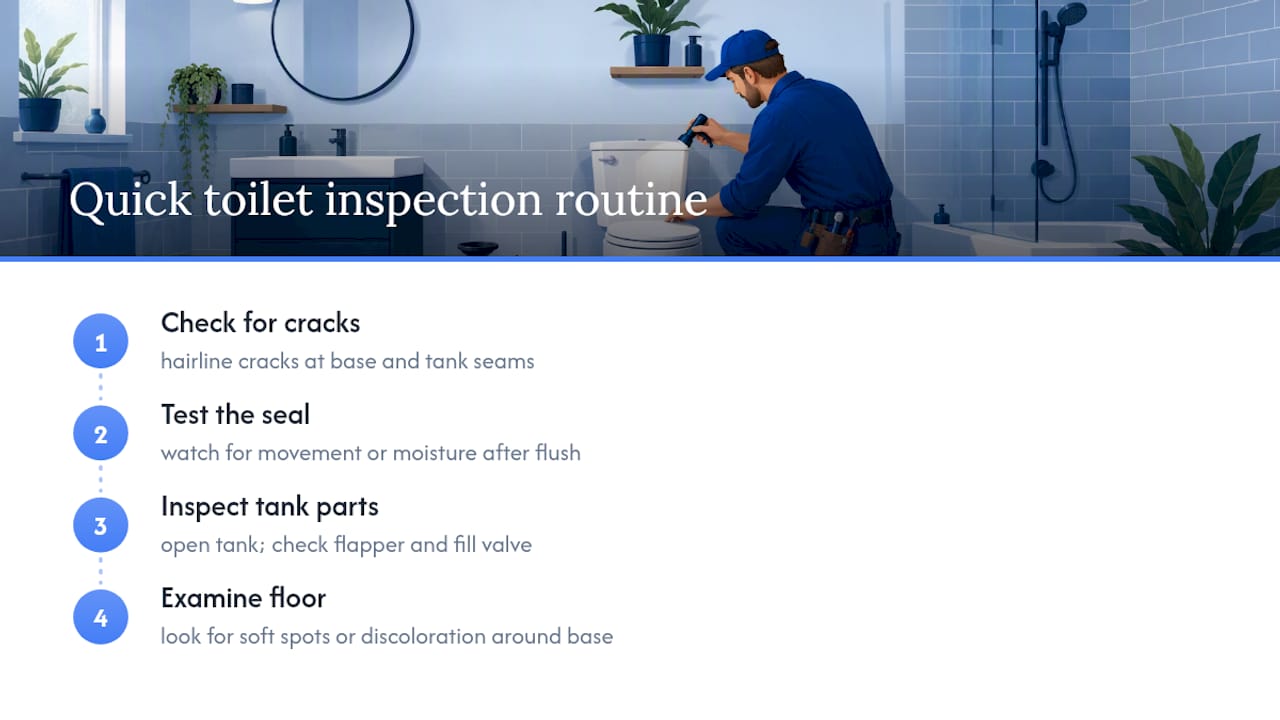
Every toilet inspection follows roughly the same routine: check for hairline cracks around the base and tank seams, test the seal by looking for movement or moisture after a flush, open the tank to assess the condition of the flapper and fill valve, and check the floor around the base for soft spots or discoloration.
Two patterns show up again and again on service calls. The first is a toilet that’s had its flapper or fill valve replaced two or three times over a couple of years, always by different fixes for what’s really the same underlying wear. The second is a hairline crack near the base that starts as a cosmetic issue and, six months later, is the reason for a slow leak into the subfloor.
Jmplumbingservicesltd handles both ends of that spectrum, from a straightforward toilet swap to a full bathroom renovation where the toilet is one piece of a larger update. If a base leak is already visible, three quick checks can confirm the source before you call anyone out.
Does a New Toilet Add Value to Your Bathroom?
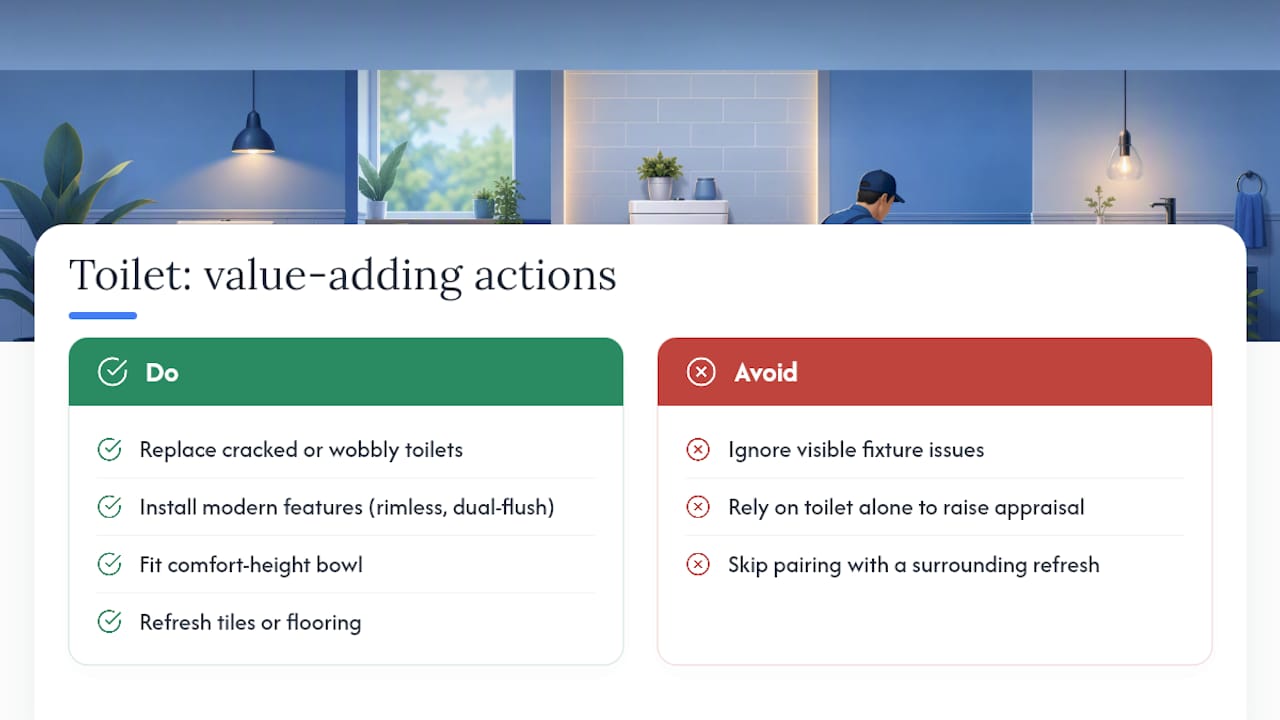
A cracked, stained, or wobbly toilet is one of the fastest things a buyer or guest notices in a bathroom, and one of the cheapest to fix relative to the impression it leaves. Real estate agents and home inspectors flag toilets in poor condition during viewings far more often than most homeowners expect, simply because the fixture is impossible to ignore.
Beyond the visual, a modern toilet changes how a bathroom functions day to day. Rimless bowls look cleaner because they genuinely stay cleaner. Dual-flush and comfort-height options read as an upgrade even to buyers who couldn’t name the feature themselves. A wall-hung toilet with a concealed cistern can make a small bathroom look noticeably larger, since the plumbing disappears behind the wall instead of taking up visible floor space.
None of this means a new toilet alone will move the needle on an appraisal. But paired with fresh tiling or updated flooring, it closes the gap between a bathroom that feels dated and one that feels finished. Homeowners planning a sale within the next few years often get more return from replacing a tired toilet and refreshing the surrounding tile than from any single higher-cost renovation item, simply because the fix is so visible and so cheap by comparison.
Author Perspective: Timing Replacement With Renovations for Best Value
The homeowners who get the most out of a toilet replacement rarely do it in isolation. They fold it into a bathroom refresh, timing the swap alongside new tiling or flooring so the labor overlaps instead of stacking. That single decision often cuts the total disruption in half, since the floor is already being opened up anyway.
Replacement also buys you reliability you can’t get from another repair. Pair it with a water-efficient model and you’re not just fixing a problem, you’re lowering a bill you’ll keep paying for years. If you’re already weighing a wider bathroom renovation, the toilet is the easiest piece to get right the first time.
— James
How Jmplumbingservicesltd Handles Toilet Replacement
This local plumbing service is an option for homeowners who want one accountable team handling the job, not a mix of subcontractors or a showroom sales pitch. That means fixed pricing agreed before work starts, direct local expertise, and no upselling once the plumber is in your bathroom.
A typical visit starts with an inspection: checking the base for cracks or movement, testing the seal, and looking at the floor underneath for any damage the old toilet may have caused. From there, you get a fixed quote in writing covering the unit, labor, and any floor repair the job needs, so there are no surprises once work is underway. Whether it’s a single toilet or WC installation or part of a larger bathroom fit, every job gets the same attention regardless of size, backed by 25 verified 5-star Google reviews from local clients. If your bathroom is due for more than just a toilet swap, a full renovation quote starts at $2,500 to $4,000 depending on scope. Get in touch to book an inspection and fixed quote for your bathroom.
Sources
- How Long Do Toilets Last In Colorado Homes? Signs Of Wear & Replacement Tips | Precision Plumbing Heating, Cooling & Electric
- Is It Time To Upgrade Your Toilet? Read Our Guide to Find Out - This Old House
- Toilet Replacement Guide: When to Replace and What to Choose | Water & Gas Worx
FAQ
Should a 20-Year-Old Toilet Be Replaced?
Not automatically, but 20 years is the point where replacement starts making more sense than continued repairs. If a toilet that old is showing cracks, persistent leaks, or repeated part failures, replacing it is usually the better long-term move over another repair.
How Much Does a Plumber Usually Charge to Replace a Toilet?
Costs vary depending on the unit, labor, and whether floor repairs are needed, so it’s worth getting a fixed quote rather than a rough estimate. Jmplumbingservicesltd’s full bathroom renovation pricing runs from $2,500 to $4,000, while a standalone toilet swap is quoted separately based on the specific job.
How Long Do Toilets Last on Average?
The porcelain bowl and cistern can last 20 to 50 years, but internal parts like flappers and fill valves typically wear out within 4 to 7 years. Most plumbers treat 20 to 25 years as the practical point to start considering full replacement.
Should You Flush the Toilet After Every Urination?
Yes, regular flushing prevents mineral buildup and staining from settling into the bowl, which keeps the trapway clear and reduces the odds of clogging over time. Skipping flushes to save water is better addressed by installing a dual-flush model, which uses a fraction of the water on liquid waste without changing your habits.